Commercial Walk In Coolers & Refrigerators
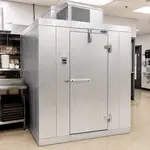
Browse more than 1,500 commercial walk-in coolers from NorLake, AmeriKooler, Kolpak and Master-Bilt, in indoor and outdoor models with or without floors. Compare self-contained boxes with top- or side-mounted refrigeration against walk-ins with remote refrigeration systems, and pair your new cooler with walk-in freezers or walk-in parts and accessories to complete your entire cold-storage room.


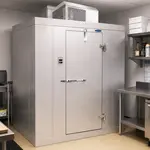
- View Product: Kolpak P7-0808-CT 7'-9" x 7'-9" x 7'-6" H Polar-Pak Indoor Walk-In Cooler with Floor, Top-Mount Refrigeration
P7-0808-CT
Kolpak
Kolpak P7-0808-CT 7'-9" x 7'-9" x 7'-6" H Polar-Pak Indoor Walk-In Cooler with Floor, Top-Mount Refrigeration
$19,256.60Call us for pricing
- View Product: NorLake KLB77610-C 6' x 10' x 7'-7" H Kold Locker Indoor Walk-In Cooler with Floor, R290 Capsule Pak
KLB77610-C
NorLake
NorLake KLB77610-C 6' x 10' x 7'-7" H Kold Locker Indoor Walk-In Cooler with Floor, R290 Capsule Pak
$13,957.88Call us for pricing
- View Product: Master-Bilt QODB77610-C Walk-In Cooler & Compressor$15,002.40
Login / Register to view all OUR PRICES!
- View Product: NorLake KODB77812-C 8' x 12' x 7'-7" H Kold Locker Outdoor Walk-In Cooler with Floor, R290 Capsule Pak ECO
KODB77812-C
NorLake
NorLake KODB77812-C 8' x 12' x 7'-7" H Kold Locker Outdoor Walk-In Cooler with Floor, R290 Capsule Pak ECO
$18,190.13Call us for pricing
- View Product: NorLake KLB7788-C 8' x 8' x 7'-7" H Kold Locker Indoor Walk-In Cooler with Floor, R290 Capsule Pak
KLB7788-C
NorLake
NorLake KLB7788-C 8' x 8' x 7'-7" H Kold Locker Indoor Walk-In Cooler with Floor, R290 Capsule Pak
$14,144.08Call us for pricing
- View Product: Kolpak P7-1008-CT Walk-In Cooler & Top Mounted Compressor$20,981.40
Call us for pricing
- View Product: Kolpak P7-1206-CT Walk-In Cooler & Top Mounted Compressor$20,494.65
Call us for pricing
- View Product: NorLake FTB6766-CX-M Walk-In Cooler & Compressor$12,608.44
Call us for pricing
- View Product: Kolpak P7-0612-CT Walk-In Cooler & Top Mounted Compressor$20,494.65
Call us for pricing
- View Product: NorLake FTOB6768-CX-M Walk-In Cooler & Compressor$14,050.19
Call us for pricing
- View Product: NorLake FTOB6777-CX-M Walk-In Cooler & Compressor$14,061.30
Call us for pricing
- View Product: NorLake FTOB6779-CX-M Walk-In Cooler & Compressor$15,153.05
Call us for pricing
- View Product: NorLake FTOB6788-CX-M Walk-In Cooler & Compressor$15,164.16
Call us for pricing
- View Product: NorLake FTOB87710-CX-M Walk-In Cooler & Compressor$16,442.27
Call us for pricing
- View Product: NorLake FTOB77810-CX-M Walk-In Cooler & Compressor$16,443.55
Call us for pricing
- View Product: NorLake FTB771010-CX-M Walk-In Cooler & Compressor$17,834.35
Call us for pricing
- View Product: NorLake FTOB67614-CX-M Walk-In Cooler & Compressor$17,849.89
Call us for pricing
- View Product: NorLake FTOB771010-CX-M Walk-In Cooler & Compressor$19,346.75
Call us for pricing
- View Product: NorLake FTB771013-CX-M Walk-In Cooler & Compressor$19,362.93
Call us for pricing
- View Product: NorLake FTB7766-X Fast-Trak® Indoor Cooler Walk-In$11,491.80
Call us for pricing
- View Product: NorLake FTOB6769-X Fast-Trak® Outdoor Cooler Walk-In$13,227.58
Call us for pricing
- View Product: NorLake FTOB6778-X Fast-Trak® Outdoor Cooler Walk-In$13,249.80
Call us for pricing
- View Product: Kolpak P8-0608-CT Walk-In Cooler & Top Mounted Compressor$18,052.10
Call us for pricing
- View Product: Kolpak P7-0610-CT Walk-In Cooler & Top Mounted Compressor$19,233.50
Call us for pricing
- View Product: Kolpak P7-1006-CT Walk-In Cooler & Top Mounted Compressor$19,233.50
Call us for pricing
- View Product: Kolpak P8-0610-CT Walk-In Cooler & Top Mounted Compressor$19,680.10
Call us for pricing
- View Product: Kolpak P8-0808-CT Walk-In Cooler & Top Mounted Compressor$19,703.20
Call us for pricing
- View Product: Kolpak P7-0810-CT Walk-In Cooler & Top Mounted Compressor$20,981.40
Call us for pricing
- View Product: Kolpak P8-0612-CT Walk-In Cooler & Top Mounted Compressor$20,991.85
Call us for pricing
- View Product: Kolpak P8-0810-CT Walk-In Cooler & Top Mounted Compressor$21,478.05
Call us for pricing
- View Product: Kolpak P8-1008-CT Walk-In Cooler & Top Mounted Compressor$21,478.05
Call us for pricing
- View Product: Kolpak P7-1208-CT Walk-In Cooler & Top Mounted Compressor$22,379.50
Call us for pricing
- View Product: Kolpak P7-0812-CT Walk-In Cooler & Top Mounted Compressor$22,379.50
Call us for pricing
- View Product: Kolpak P8-0812-CT Walk-In Cooler & Top Mounted Compressor$22,927.85
Call us for pricing
- View Product: Kolpak P7-1010-CT Walk-In Cooler & Top Mounted Compressor$23,241.90
Call us for pricing
- View Product: Kolpak P8-1010-CT Walk-In Cooler & Top Mounted Compressor$23,790.25
Call us for pricing
- View Product: Kolpak P7-1012-CT Walk-In Cooler & Top Mounted Compressor$25,144.35
Call us for pricing
- View Product: Kolpak P8-1012-CT Walk-In Cooler & Top Mounted Compressor$25,743.85
Call us for pricing
- View Product: Kolpak P7-1212-CT Walk-In Cooler & Top Mounted Compressor$26,698.65
Call us for pricing
- View Product: Kolpak P8-1212-CT Walk-In Cooler & Top Mounted Compressor$27,562.15
Call us for pricing
- View Product: Kolpak KF8-0808-CR Kold-Front Walk-In Cooler 8'-6.25" H, 7'-9" W, 7'-9" L with Era floor
KF8-0808-CR
Kolpak
Kolpak KF8-0808-CR Kold-Front Walk-In Cooler 8'-6.25" H, 7'-9" W, 7'-9" L with Era floor
$20,290.60Call us for pricing
- View Product: Kolpak KF8-1006-CR Kold-Front Walk-In Cooler 8'-6.25" H, 9'-8" W, 5'-10" L with Era floor
KF8-1006-CR
Kolpak
Kolpak KF8-1006-CR Kold-Front Walk-In Cooler 8'-6.25" H, 9'-8" W, 5'-10" L with Era floor
$20,440.20Call us for pricing
- View Product: Kolpak KF8-0610-CR Walk-In Cooler 8'-6.25" H, 5'-10" W, 9'-8" L with Era floor$20,440.20
Call us for pricing
- View Product: Kolpak KF7-0612-CR Walk-In Cooler 7'-6.25" H, 5'-10" W, 11'-7" L with Era floor$21,129.90
Call us for pricing
- View Product: Kolpak KF7-1206-CR Kold-Front Walk-In Cooler 7'-6.25" H, 11'-7" W, 5'-10" L with Era floor
KF7-1206-CR
Kolpak
Kolpak KF7-1206-CR Kold-Front Walk-In Cooler 7'-6.25" H, 11'-7" W, 5'-10" L with Era floor
$21,129.90Call us for pricing
- View Product: Kolpak KF7-0810-CR Walk-In Cooler 7'-6.25" H, 7'-9" W, 9'-8" L with Era floor$21,645.25
Call us for pricing
- View Product: Kolpak KF7-1008-CR Kold-Front Walk-In Cooler 7'-6.25" H, 9'-8" W, 7'-9" L with Era floor
KF7-1008-CR
Kolpak
Kolpak KF7-1008-CR Kold-Front Walk-In Cooler 7'-6.25" H, 9'-8" W, 7'-9" L with Era floor
$21,645.25Call us for pricing
- View Product: Kolpak KF8-0612-CR Walk-In Cooler 8'-6.25" H, 5'-10" W, 11'-7" L with Era floor$21,732.15
Call us for pricing
- View Product: Kolpak KF8-1206-CR Kold-Front Walk-In Cooler 8'-6.25" H, 11'-7" W, 5'-10" L with Era floor
KF8-1206-CR
Kolpak
Kolpak KF8-1206-CR Kold-Front Walk-In Cooler 8'-6.25" H, 11'-7" W, 5'-10" L with Era floor
$21,732.15Call us for pricing
- View Product: Kolpak KF8-1008-CR Kold-Front Walk-In Cooler 8'-6.25" H, 9'-8" W, 7'-9" L with Era floor
KF8-1008-CR
Kolpak
Kolpak KF8-1008-CR Kold-Front Walk-In Cooler 8'-6.25" H, 9'-8" W, 7'-9" L with Era floor
$22,172.15Call us for pricing
- View Product: Kolpak KF8-0810-CR Walk-In Cooler 8'-6.25" H, 7'-9" W, 9'-8" L with Era floor$22,172.15
Call us for pricing
- View Product: Kolpak KF8-1208-CR Kold-Front Walk-In Cooler 8'-6.25" H, 11'-7" W, 7'-9" L with Era floor,
KF8-1208-CR
Kolpak
Kolpak KF8-1208-CR Kold-Front Walk-In Cooler 8'-6.25" H, 11'-7" W, 7'-9" L with Era floor,
$23,709.95Call us for pricing
- View Product: Kolpak KF8-0812-CR Walk-In Cooler 8'-6.25" H, 7'-9" W, 11'-7" L with Era floor$23,709.95
Call us for pricing
- View Product: Kolpak KF7-1010-CR Kold-Front Walk-In Cooler 7'-6.25" H, 9'-8" W, 9'-8" L with Era floor
KF7-1010-CR
Kolpak
Kolpak KF7-1010-CR Kold-Front Walk-In Cooler 7'-6.25" H, 9'-8" W, 9'-8" L with Era floor
$24,041.05Call us for pricing
- View Product: Kolpak KF7-0812-CR Walk-In Cooler 7'-6.25" H, 7'-9" W, 11'-7" L with Era floor$24,178.55
Call us for pricing
- View Product: Kolpak KF7-1208-CR Kold-Front Walk-In Cooler 7'-6.25" H, 11'-7" W, 7'-9" L with Era floor
KF7-1208-CR
Kolpak
Kolpak KF7-1208-CR Kold-Front Walk-In Cooler 7'-6.25" H, 11'-7" W, 7'-9" L with Era floor
$24,178.55Call us for pricing
- View Product: Kolpak KF7-0814-CR Walk-In Cooler 7'-6.25" H, 7'-9" W, 13'-6" L with Era floor$24,240.70
Call us for pricing
- View Product: Kolpak KF7-1408-CR Walk-In Cooler 7'-6.25" H, 13'-6" W, 7'-9" L with Era floor$24,240.70
Call us for pricing
- View Product: Kolpak KF8-1010-CR Kold-Front Walk-In Cooler 8'-6.25" H, 9'-8" W, 9'-8" L with Era floor
KF8-1010-CR
Kolpak
Kolpak KF8-1010-CR Kold-Front Walk-In Cooler 8'-6.25" H, 9'-8" W, 9'-8" L with Era floor
$24,622.40Call us for pricing
- View Product: Kolpak KF8-0814-CR Walk-In Cooler 8'-6.25" H, 7'-9" W, 13'-6" L with Era floor$26,204.75
Call us for pricing
- View Product: Kolpak KF8-1408-CR Walk-In Cooler 8'-6.25" H, 13'-6" W, 7'-9" L with Era floor$26,204.75
Call us for pricing
- View Product: Kolpak KF8-1210-CR Kold-Front Walk-In Cooler 8'-6.25" H, 11'-7" W, 9'-8" L with Era floor
KF8-1210-CR
Kolpak
Kolpak KF8-1210-CR Kold-Front Walk-In Cooler 8'-6.25" H, 11'-7" W, 9'-8" L with Era floor
$27,669.40Call us for pricing
- View Product: Kolpak KF8-1012-CR Kold-Front Walk-In Cooler 8'-6.25" H, 9'-8" W, 11'-7" L with Era floor
KF8-1012-CR
Kolpak
Kolpak KF8-1012-CR Kold-Front Walk-In Cooler 8'-6.25" H, 9'-8" W, 11'-7" L with Era floor
$27,669.40Call us for pricing
- View Product: Kolpak KF8-1014-CR Kold-Front Walk-In Cooler 8'-6.25" H, 9'-8" W, 13'-6" L with Era floor
KF8-1014-CR
Kolpak
Kolpak KF8-1014-CR Kold-Front Walk-In Cooler 8'-6.25" H, 9'-8" W, 13'-6" L with Era floor
$28,996.55Call us for pricing
- View Product: Kolpak KF8-1410-CR Kold-Front Walk-In Cooler 8'-6.25" H, 13'-6" W, 9'-8" L with Era floor
KF8-1410-CR
Kolpak
Kolpak KF8-1410-CR Kold-Front Walk-In Cooler 8'-6.25" H, 13'-6" W, 9'-8" L with Era floor
$28,996.55Call us for pricing
- View Product: Kolpak KF8-1212-CR Kold-Front Walk-In Cooler 8'-6.25" H, 11'-7" W, 11'-7" L with Era floor
KF8-1212-CR
Kolpak
Kolpak KF8-1212-CR Kold-Front Walk-In Cooler 8'-6.25" H, 11'-7" W, 11'-7" L with Era floor
$29,381.55Call us for pricing
- View Product: Master-Bilt QSB7766-C 6' x 6' x 7'-7" H Quick Ship Indoor Walk-In Cooler with Floor, R290 Capsule Pak
QSB7766-C
Master-Bilt
Master-Bilt QSB7766-C 6' x 6' x 7'-7" H Quick Ship Indoor Walk-In Cooler with Floor, R290 Capsule Pak
$11,786.65Login / Register to view all OUR PRICES!
- View Product: Master-Bilt QODB7766-C 6' x 6' x 7'-7" H Quick Ship Outdoor Walk-In Cooler with Floor, R290 Capsule Pak ECO
QODB7766-C
Master-Bilt
Master-Bilt QODB7766-C 6' x 6' x 7'-7" H Quick Ship Outdoor Walk-In Cooler with Floor, R290 Capsule Pak ECO
$12,719.55Login / Register to view all OUR PRICES!
- View Product: Master-Bilt QSB7768-C Walk-In Cooler & Compressor$12,807.90
Login / Register to view all OUR PRICES!
- View Product: Master-Bilt QODB7768-C Walk-In Cooler & Compressor$13,797.33
Login / Register to view all OUR PRICES!
- View Product: Master-Bilt QSB77610-C Walk-In Cooler & Compressor$13,957.88
Login / Register to view all OUR PRICES!
- View Product: Master-Bilt QSB7788-C Walk-In Cooler & Compressor$14,144.08
Login / Register to view all OUR PRICES!
- View Product: Master-Bilt QSB77612-C Walk-In Cooler & Compressor$15,099.78
Login / Register to view all OUR PRICES!
- View Product: Master-Bilt QODB7788-C Walk-In Cooler & Compressor$15,211.40
Login / Register to view all OUR PRICES!
- View Product: Master-Bilt QSB77810-C Walk-In Cooler & Compressor$15,486.90
Login / Register to view all OUR PRICES!
- View Product: Master-Bilt QODB77612-C Walk-In Cooler & Compressor$16,207.48
Login / Register to view all OUR PRICES!
- View Product: Master-Bilt QODB77810-C Walk-In Cooler & Compressor$16,443.55
Login / Register to view all OUR PRICES!
- View Product: Master-Bilt QSB77812-C Walk-In Cooler & Compressor$17,023.05
Login / Register to view all OUR PRICES!
- View Product: Master-Bilt QSB77614-C Walk-In Cooler & Compressor$17,547.93
Login / Register to view all OUR PRICES!
- View Product: Master-Bilt QSB771010-C Walk-In Cooler & Compressor$17,834.35
Login / Register to view all OUR PRICES!
- View Product: Master-Bilt QODB77812-C Walk-In Cooler & Compressor$18,190.60
Login / Register to view all OUR PRICES!
- View Product: Master-Bilt QODB77614-C Walk-In Cooler & Compressor$18,906.43
Login / Register to view all OUR PRICES!
- View Product: Master-Bilt QSB771012-C Walk-In Cooler & Compressor$19,122.08
Login / Register to view all OUR PRICES!
- View Product: Master-Bilt QODB771010-C Walk-In Cooler & Compressor$19,346.75
Login / Register to view all OUR PRICES!
- View Product: Master-Bilt QSB77814-C Walk-In Cooler & Compressor$19,468.35
Login / Register to view all OUR PRICES!
- View Product: Master-Bilt QSB771014-C Walk-In Cooler & Compressor$20,563.69
Login / Register to view all OUR PRICES!
- View Product: Master-Bilt QODB77814-C Walk-In Cooler & Compressor$20,725.20
Login / Register to view all OUR PRICES!
- View Product: Master-Bilt QODB771012-C Walk-In Cooler & Compressor$20,745.15
Login / Register to view all OUR PRICES!
- View Product: Master-Bilt QODB771014-C Walk-In Cooler & Compressor$24,097.23
Login / Register to view all OUR PRICES!
- View Product: NorLake KLB7766-C Walk-In Cooler & Top Mounted Compressor$12,167.60
Call us for pricing
- View Product: NorLake KODB7766-C Walk-In Cooler & Top Mounted Compressor$12,719.08
Call us for pricing
- View Product: NorLake KLB7768-C Walk-In Cooler & Top Mounted Compressor$12,807.90
Call us for pricing
- View Product: NorLake FTB7766-CX-M Walk-In Cooler & Compressor$12,167.60
Call us for pricing
- View Product: NorLake KODB7768-C Walk-In Cooler & Top Mounted Compressor$13,797.33
Call us for pricing
- View Product: NorLake FTB7767-CX-M Walk-In Cooler & Compressor$12,522.90
Call us for pricing
- View Product: NorLake FTOB7766-CX-M Walk-In Cooler & Compressor$12,719.08
Call us for pricing
- View Product: NorLake FTB7768-CX-M Walk-In Cooler & Compressor$12,807.90
Call us for pricing
- View Product: NorLake FTB7777-CX-M Walk-In Cooler & Compressor$12,991.25
Call us for pricing
- View Product: NorLake FTB6767-CX-M Walk-In Cooler & Compressor$13,038.95
Call us for pricing
- View Product: NorLake FTB8766-CX-M Walk-In Cooler & Compressor$13,055.37
Call us for pricing





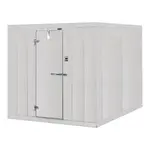
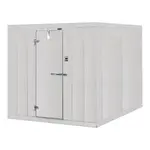
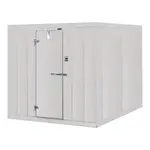


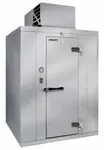



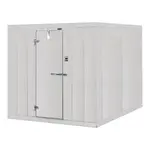
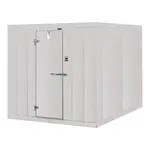
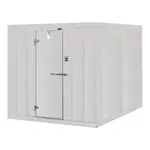
Top-Rated Walk-In Coolers
- View Product: NorLake KLB74614-C 6' x 14' x 7'-4" H Kold Locker Indoor Floorless Walk-In Cooler, R290 Capsule Pak
KLB74614-C
NorLake
NorLake KLB74614-C 6' x 14' x 7'-4" H Kold Locker Indoor Floorless Walk-In Cooler, R290 Capsule Pak
$15,373.38Call us for pricing
- View Product: NorLake KLB77610-C 6' x 10' x 7'-7" H Kold Locker Indoor Walk-In Cooler with Floor, R290 Capsule Pak
KLB77610-C
NorLake
NorLake KLB77610-C 6' x 10' x 7'-7" H Kold Locker Indoor Walk-In Cooler with Floor, R290 Capsule Pak
$13,957.88Call us for pricing
- View Product: NorLake KLB7468-C 6' x 8' x 7'-4" H Kold Locker Indoor Floorless Walk-In Cooler, R290 Capsule Pak
KLB7468-C
NorLake
NorLake KLB7468-C 6' x 8' x 7'-4" H Kold Locker Indoor Floorless Walk-In Cooler, R290 Capsule Pak
$11,861.70Call us for pricing
- View Product: Kolpak P7-0808-CT 7'-9" x 7'-9" x 7'-6" H Polar-Pak Indoor Walk-In Cooler with Floor, Top-Mount Refrigeration
P7-0808-CT
Kolpak
Kolpak P7-0808-CT 7'-9" x 7'-9" x 7'-6" H Polar-Pak Indoor Walk-In Cooler with Floor, Top-Mount Refrigeration
$19,256.60Call us for pricing
- View Product: Kolpak PX7-0608-CT 5'-10" x 7'-9" x 7'-6" H Polar-Pak Indoor Floorless Walk-In Cooler, Top-Mount Refrigeration
PX7-0608-CT
Kolpak
Kolpak PX7-0608-CT 5'-10" x 7'-9" x 7'-6" H Polar-Pak Indoor Floorless Walk-In Cooler, Top-Mount Refrigeration
$16,280.55Call us for pricing
- View Product: Kolpak PX7-0610-CT 5'-10" x 9'-8" x 7'-6" H Polar-Pak Indoor Floorless Walk-In Cooler, Top-Mount Refrigeration
PX7-0610-CT
Kolpak
Kolpak PX7-0610-CT 5'-10" x 9'-8" x 7'-6" H Polar-Pak Indoor Floorless Walk-In Cooler, Top-Mount Refrigeration
$17,522.45Call us for pricing
- View Product: NorLake KODB77812-C 8' x 12' x 7'-7" H Kold Locker Outdoor Walk-In Cooler with Floor, R290 Capsule Pak ECO
KODB77812-C
NorLake
NorLake KODB77812-C 8' x 12' x 7'-7" H Kold Locker Outdoor Walk-In Cooler with Floor, R290 Capsule Pak ECO
$18,190.13Call us for pricing
- View Product: NorLake KLB7788-C 8' x 8' x 7'-7" H Kold Locker Indoor Walk-In Cooler with Floor, R290 Capsule Pak
KLB7788-C
NorLake
NorLake KLB7788-C 8' x 8' x 7'-7" H Kold Locker Indoor Walk-In Cooler with Floor, R290 Capsule Pak
$14,144.08Call us for pricing
- View Product: Kolpak KFX7-0808-CR Kold-Front Walk-In Cooler 7'-6.25" H, 7'-9" W, 7'-9" L floorless
KFX7-0808-CR
Kolpak
Kolpak KFX7-0808-CR Kold-Front Walk-In Cooler 7'-6.25" H, 7'-9" W, 7'-9" L floorless
$18,051.00Call us for pricing
- View Product: Kolpak P7-1008-CT Walk-In Cooler & Top Mounted Compressor$20,981.40
Call us for pricing
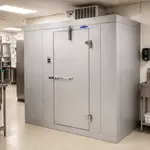


What customers say about our Walk-In Coolers
15 verified customer reviews across 10 Walk-In Coolers
Popular Brands for Commercial Walk In Coolers & Refrigerators


Walk-In Coolers FAQs
Does a walk-in cooler need a floor?
Should I choose a self-contained or remote walk-in cooler?
What temperature should a walk-in cooler hold?
What size walk-in cooler does my restaurant need?
Can a walk-in cooler be installed outdoors?
How often should a walk-in cooler be maintained?
What electrical service does a walk-in cooler need?
Walk-In Cooler Buying Guide
A commercial walk-in cooler is a room-sized refrigerator built from insulated panels that holds produce, dairy, meat, beverages and prepared food at about 35 to 38 degrees F. Restaurants, bars, grocery stores, caterers and florists use them when reach-ins no longer hold enough product. This category covers modular walk-in coolers with self-contained or remote refrigeration, for indoor and outdoor installation.
Self-Contained and Remote Walk-In Coolers
- Self-contained walk-in coolers have a pre-charged refrigeration system mounted on top of or through the wall of the box. They need only an electrical connection but release condenser heat into the surrounding room.
- Remote walk-in coolers place the evaporator inside the box and the condensing unit outdoors or on the roof, connected by a refrigerant line set. This keeps heat and noise out of the kitchen; a refrigeration contractor installs the system.
- Outdoor walk-in coolers add a weather-resistant roof and protection for the condensing unit.
How to Choose a Walk-In Cooler
Size the box by the volume of product you receive per delivery and the shelving layout you need, and measure the space, door openings and ceiling height before ordering. Choose self-contained or remote refrigeration based on where heat can go and who will install it, and confirm the electrical supply. Look for a self-closing door, an inside safety release, a thermometer visible from outside, interior lighting rated for cold, damp spaces and panel joints that lock tightly.
Sizes and Layout
Common footprints start around 6 x 6 ft for a small cafe or bar and run to 10 x 12 ft and larger for high-volume kitchens and grocery back rooms. Plan for shelving on two or three walls with an aisle at least 36 inches wide, and leave clearance above the box for a top-mounted refrigeration unit or for service access. Standard interior heights are around 7 ft 6 in; taller boxes add storage only if your shelving can use it.
Floor or Floorless
Floorless coolers set directly on a level, insulated concrete slab and allow carts and dollies to roll straight in. Boxes with an insulated floor can go on most surfaces, including upper floors, but the raised floor usually needs an interior or exterior ramp for wheeled loads.
Panels, Insulation and Doors
Most panels use foamed-in-place polyurethane insulation with cam-lock joints, skinned in galvanized, aluminum or stainless steel. Federal efficiency rules for walk-ins set minimum insulation levels (R-25 for cooler walls and ceilings), so compare panel thickness and finish rather than assuming every box is the same. A heated door frame, strip curtain and reliable door closer reduce warm-air infiltration and frost around the opening.
Installation and Maintenance
Check local code, permits and floor load before delivery. Self-contained units plug or hard-wire into a dedicated circuit; remote systems need a licensed refrigeration contractor for the line set and charge. Clean condenser and evaporator coils at least every six months (more often for outdoor units), inspect door gaskets and hinges, keep the area around the condenser clear, and never prop the door open.
Brands
Most walk-in coolers here come from NorLake and AmeriKooler, with additional models from Kolpak, Master-Bilt and Atosa.
Related categories: walk-in refrigeration, walk-in freezers, walk-ins with drop-in refrigeration systems, walk-ins with remote refrigeration systems and walk-in parts and accessories.
Need Help Choosing Walk-In Coolers?
Our equipment experts are here to help you find the perfect solution.