Restaurant Gas Ranges
Browse more than 1,800 restaurant gas ranges from Southbend, Garland US Range, American Range and Imperial, in 24" to 72" widths with four to twelve burners. Choose standard oven, convection oven or storage bases, with griddle, broiler and hot top options, in natural gas or propane. For all-day lines compare heavy-duty gas ranges, or see restaurant electric ranges and countertop ranges.
- View Product: Southbend S36D Restaurant Gas Range, with 6 Burners and Standard Oven - 203,000 BTU$2,618.00
- View Product: Garland US Range Garland/US Range X60-6R24RR Restaurant Gas Range, 60" W with 6 Burners (1) 24" Raised Griddle/Broiler and (2) Standard Ovens - 289,500 BTU
X60-6R24RR
Garland US Range
Garland US Range Garland/US Range X60-6R24RR Restaurant Gas Range, 60" W with 6 Burners (1) 24" Raised Griddle/Broiler and (2) Standard Ovens - 289,500 BTU
$5,499.00Call us for pricing
- View Product: American Range AR-4-SB Restaurant Gas Range, 24" W$2,782.55
- View Product: Imperial ER-4 Restaurant Gas Range, 24" W with 4 Burners and Space Saver Oven - 134,000 BTU
ER-4
Imperial
Imperial ER-4 Restaurant Gas Range, 24" W with 4 Burners and Space Saver Oven - 134,000 BTU
$2,408.00Call us for pricing
- View Product: Jade Range JBR-2-M Bistro™ Restaurant Range$5,156.60
- View Product: Vulcan SX24-4B-QS-PLATINUM Restaurant Gas Range, 24" W with 4 Burners and Standard Oven - 142,000 BTU
SX24-4B-QS-PLATINUM
Vulcan
Vulcan SX24-4B-QS-PLATINUM Restaurant Gas Range, 24" W with 4 Burners and Standard Oven - 142,000 BTU
$2,174.00Call us for pricing
- View Product: Wolf C36S-6B Restaurant Gas Range, with 6 Burners and Standard Oven - 215,000 BTU$4,420.00
Call us for pricing
- View Product: Falcon AR60-24RB Restaurant Range$3,684.15
- View Product: Southbend S24E Restaurant Gas Range, 24" W with 4 Burners and Space Saver Oven - 147,000 BTU
S24E
Southbend
Southbend S24E Restaurant Gas Range, 24" W with 4 Burners and Space Saver Oven - 147,000 BTU
$2,559.00 - View Product: Garland US Range Garland/US Range X60-10RR Restaurant Gas Range, 60" W with 10 Burners and (2) Standard Ovens - 366,000 BTU
X60-10RR
Garland US Range
Garland US Range Garland/US Range X60-10RR Restaurant Gas Range, 60" W with 10 Burners and (2) Standard Ovens - 366,000 BTU
$4,499.00Call us for pricing
- View Product: American Range AR-4 Restaurant Gas Range, 24" W$3,035.25
- View Product: Imperial ER-6 Restaurant Gas Range with 6 Burners and Standard Oven - 203,000 BTU$2,463.00
Call us for pricing
- View Product: Jade Range JBR-12G-M Bistro™ Restaurant Range$5,485.23
- View Product: Vulcan SX36-6B-QS-PLATINUM Restaurant Gas Range, 36" W with 6 Burners and Standard Oven - 198,000 BTU
SX36-6B-QS-PLATINUM
Vulcan
Vulcan SX36-6B-QS-PLATINUM Restaurant Gas Range, 36" W with 6 Burners and Standard Oven - 198,000 BTU
$2,307.00Call us for pricing
- View Product: Wolf WX24-4BP-QS-COMMANDER Restaurant Gas Range, 24" W$2,255.00
Call us for pricing
- View Product: Falcon AR36-24R Restaurant Range$2,145.15
- View Product: Southbend S36C Restaurant Gas Range, with 6 Burners and Cabinet Base - 168,000 BTU$3,670.00
- View Product: Garland US Range Garland/US Range X36-6R Restaurant Gas Range, 36" W with 6 Burners and Standard Oven - 213,000 BTU
X36-6R
Garland US Range
Garland US Range Garland/US Range X36-6R Restaurant Gas Range, 36" W with 6 Burners and Standard Oven - 213,000 BTU
$2,329.00Call us for pricing
- View Product: American Range AR-24G-SB Restaurant Gas Range, 24" W$3,556.80
- View Product: Imperial IR-4-XB Restaurant Gas Range, 24" W with 4 Burners and Open Cabinet Base with Bottom Shelf - 128,000 BTU
IR-4-XB
Imperial
Imperial IR-4-XB Restaurant Gas Range, 24" W with 4 Burners and Open Cabinet Base with Bottom Shelf - 128,000 BTU
$4,037.00Call us for pricing
- View Product: Jade Range JBR-24G-M Restaurant Gas Range, 24" W with (1) 24" Griddle and Modular Base - 48,000 BTU
JBR-24G-M
Jade Range
Jade Range JBR-24G-M Restaurant Gas Range, 24" W with (1) 24" Griddle and Modular Base - 48,000 BTU
$6,824.53 - View Product: Vulcan 12-2B Endurance™ Restaurant Range$4,207.00
Call us for pricing
- View Product: Wolf WX24-4BN-QS-COMMANDER Restaurant Gas Range, 24" W$2,255.00
Call us for pricing
- View Product: Falcon AR24-4 Restaurant Range$1,524.15
- View Product: Southbend 4361D Restaurant Gas Range, with 6 Burners and Standard Oven - 243,000 BTU$4,084.00
- View Product: Garland US Range Garland/US Range X24-4L Restaurant Gas Range, 24" W with 4 Burners and Space Saver Oven - 145,000 BTU
X24-4L
Garland US Range
Garland US Range Garland/US Range X24-4L Restaurant Gas Range, 24" W with 4 Burners and Space Saver Oven - 145,000 BTU
$2,189.00Call us for pricing
- View Product: American Range AR-12G-2B-SB Restaurant Gas Range, 24" W$3,572.00
- View Product: Imperial IR-6-XB 36" Restaurant Gas Range with 6 Burners and Open Cabinet Base - 192,000 BTU
IR-6-XB
Imperial
Imperial IR-6-XB 36" Restaurant Gas Range with 6 Burners and Open Cabinet Base - 192,000 BTU
$4,830.00Call us for pricing
- View Product: Jade Range JBR-4 Restaurant Gas Range, 24" W with 4 Burners and Cabinet Base - 120,000 BTU
JBR-4
Jade Range
Jade Range JBR-4 Restaurant Gas Range, 24" W with 4 Burners and Cabinet Base - 120,000 BTU
$6,867.01 - View Product: Vulcan 36S-6BN Restaurant Gas Range, with 6 Burners and Standard Oven - 215,000 BTU$4,483.00
Call us for pricing
- View Product: Wolf WX36-6BP-QS-COMMANDER Restaurant Gas Range$2,390.00
Call us for pricing
- View Product: Falcon AR36-6 Restaurant Range$1,327.32
- View Product: Southbend S36C-1G Restaurant Gas Range, 36" W with 4 Burners, (1) 12" Griddle and Cabinet Base - 130,000 BTU
S36C-1G
Southbend
Southbend S36C-1G Restaurant Gas Range, 36" W with 4 Burners, (1) 12" Griddle and Cabinet Base - 130,000 BTU
$4,569.00 - View Product: Garland US Range Garland/US Range G24-4T Restaurant Gas Range, 24" W with 4 Burners and Modular Base - 132,000 BTU
G24-4T
Garland US Range
Garland US Range Garland/US Range G24-4T Restaurant Gas Range, 24" W with 4 Burners and Modular Base - 132,000 BTU
$2,063.00Call us for pricing
- View Product: American Range AR-12G-4B Restaurant Gas Range, 36" W with 4 Burners, (1) 12" Griddle and Standard Oven - 183,000 BTU
AR-12G-4B
American Range
American Range AR-12G-4B Restaurant Gas Range, 36" W with 4 Burners, (1) 12" Griddle and Standard Oven - 183,000 BTU
$4,552.88 - View Product: Imperial IR-2-G12-XB Restaurant Gas Range, 24" W with 2 Burners (1) 12" Griddle and Open Cabinet Base - 84,000 BTU
IR-2-G12-XB
Imperial
Imperial IR-2-G12-XB Restaurant Gas Range, 24" W with 2 Burners (1) 12" Griddle and Open Cabinet Base - 84,000 BTU
$5,448.00Call us for pricing
- View Product: Jade Range JBR-4-M Restaurant Gas Range, 24" W with 4 Burners and Modular Base - 120,000 BTU
JBR-4-M
Jade Range
Jade Range JBR-4-M Restaurant Gas Range, 24" W with 4 Burners and Modular Base - 120,000 BTU
$7,176.17 - View Product: Vulcan 24S-4B Restaurant Gas Range, 24" W with 4 Burners and Standard Oven - 143,000 BTU
24S-4B
Vulcan
Vulcan 24S-4B Restaurant Gas Range, 24" W with 4 Burners and Standard Oven - 143,000 BTU
$4,483.00Call us for pricing
- View Product: Wolf WX36-6BN-QS-COMMANDER Restaurant Gas Range$2,390.00
Call us for pricing
- View Product: Southbend S36C-2G R Restaurant Gas Range, with 2 Burners (1) 24" Griddle and Cabinet Base - 104,000 BTU
S36C-2G
Southbend
Southbend S36C-2G R Restaurant Gas Range, with 2 Burners (1) 24" Griddle and Cabinet Base - 104,000 BTU
$4,617.00 - View Product: Garland US Range X24-4L-SIGNATURE Restaurant Gas Range, 24" W with 4 Burners and Space Saver Oven - 145,000 BTU
X24-4L-SIGNATURE
Garland US Range
Garland US Range X24-4L-SIGNATURE Restaurant Gas Range, 24" W with 4 Burners and Space Saver Oven - 145,000 BTU
$2,189.00Call us for pricing
- View Product: American Range AR-24G-2B-SB Restaurant Gas Range, 36" W with 2 Burners, (1) 24" Griddle and Storage Base - 104,000 BTU
AR-24G-2B-SB
American Range
American Range AR-24G-2B-SB Restaurant Gas Range, 36" W with 2 Burners, (1) 24" Griddle and Storage Base - 104,000 BTU
$4,617.00 - View Product: Imperial IR-G24-XB Restaurant Gas Range, 24" W with (1) 24" Griddle and Space Saver Oven - 40,000 BTU
IR-G24-XB
Imperial
Imperial IR-G24-XB Restaurant Gas Range, 24" W with (1) 24" Griddle and Space Saver Oven - 40,000 BTU
$5,497.00Call us for pricing
- View Product: Jade Range JBR-4-24 Restaurant Gas Range, 24" W with 4 Burners and Standard Oven - 150,000 BTU
JBR-4-24
Jade Range
Jade Range JBR-4-24 Restaurant Gas Range, 24" W with 4 Burners and Standard Oven - 150,000 BTU
$7,406.27 - View Product: Vulcan SX60F-6B24G-QS-PLATINUM Restaurant Gas Range, 60" W with 6 Burners, 24" Griddle and (2) Ovens - 258,000 BTU
SX60F-6B24G-QS-PLATINUM
Vulcan
Vulcan SX60F-6B24G-QS-PLATINUM Restaurant Gas Range, 60" W with 6 Burners, 24" Griddle and (2) Ovens - 258,000 BTU
$5,000.00Call us for pricing
- View Product: Wolf C36S-6B-QS-COMMANDER Restaurant Gas Range$4,940.95
Call us for pricing
- View Product: Southbend S36C-3G Restaurant Gas Range, with (1) 36" Griddle and Cabinet Base - 64,000 BTU
S36C-3G
Southbend
Southbend S36C-3G Restaurant Gas Range, with (1) 36" Griddle and Cabinet Base - 64,000 BTU
$4,985.00 - View Product: Garland US Range Garland/US Range U24-G24S Restaurant Gas Range, 24" W with (1) 24" Griddle and Storage Base - 36,000 BTU
U24-G24S
Garland US Range
Garland US Range Garland/US Range U24-G24S Restaurant Gas Range, 24" W with (1) 24" Griddle and Storage Base - 36,000 BTU
$3,453.00Call us for pricing
- View Product: Falcon AR36-12R Restaurant Range$2,145.15
- View Product: Falcon AR36-6C Restaurant Gas Range, 36" W with 6 Burners and Convection Oven - 211,000 BTU
AR36-6C
Falcon
Falcon AR36-6C Restaurant Gas Range, 36" W with 6 Burners and Convection Oven - 211,000 BTU
$2,396.52 - View Product: Falcon AR36-24R-2000 2-Burner Gas Range with 24" Right Griddle & Oven, 30,000 BTU, 2000 ft Elevation
AR36-24R-2000
Falcon
Falcon AR36-24R-2000 2-Burner Gas Range with 24" Right Griddle & Oven, 30,000 BTU, 2000 ft Elevation
$1,788.59 - View Product: Falcon AR36-12R-2000 4-Burner Gas Range with 12" Right Griddle & Oven, 30,000 BTU, 2000 ft Elevation
AR36-12R-2000
Falcon
Falcon AR36-12R-2000 4-Burner Gas Range with 12" Right Griddle & Oven, 30,000 BTU, 2000 ft Elevation
$1,717.85 - View Product: Falcon AR60-10 Restaurant Range$3,157.65
- View Product: Falcon AR60-24R Restaurant Range$3,508.65
- View Product: Falcon AR60-10-4500 60" 10-Burner Gas Range with Oven, 30,000 BTU, 4500 ft Elevation
AR60-10-4500
Falcon
Falcon AR60-10-4500 60" 10-Burner Gas Range with Oven, 30,000 BTU, 4500 ft Elevation
$3,918.00 - View Product: Falcon AR60-24R-4500 60" 6-Burner Gas Range with 24" Right Griddle & 2 Ovens, 30,000 BTU, 4500' Elevation
AR60-24R-4500
Falcon
Falcon AR60-24R-4500 60" 6-Burner Gas Range with 24" Right Griddle & 2 Ovens, 30,000 BTU, 4500' Elevation
$3,252.32 - View Product: Falcon AR60-10-2000 10-Burner Gas Range with Oven, 30,000 BTU, 2000 ft Elevation$2,736.91
- View Product: Falcon AR60-24RB-4500 60" 6-Burner Gas Range with 2 Ovens & 24" Raised Griddle, 30,000 BTU, 4500 ft Elevation
AR60-24RB-4500
Falcon
Falcon AR60-24RB-4500 60" 6-Burner Gas Range with 2 Ovens & 24" Raised Griddle, 30,000 BTU, 4500 ft Elevation
$3,598.06 - View Product: Falcon AR60-24RB-2000 6-Burner Gas Range with 24" Raised Griddle, 30,000 BTU, 2000 ft Elevation
AR60-24RB-2000
Falcon
Falcon AR60-24RB-2000 6-Burner Gas Range with 24" Raised Griddle, 30,000 BTU, 2000 ft Elevation
$3,797.49 - View Product: Summit Commercial RG201B Gas range$729.00
- View Product: Admiral Craft BDGR-24/NG Restaurant Gas Range, 24" W with 4 Burners and Standard Oven - 148,000 BTU
BDGR-24/NG
Admiral Craft
Admiral Craft BDGR-24/NG Restaurant Gas Range, 24" W with 4 Burners and Standard Oven - 148,000 BTU
$1,560.00 - View Product: Admiral Craft BDGR-36/NG Restaurant Gas Range, with 6 Burners and Standard Oven - 208,000 BTU
BDGR-36/NG
Admiral Craft
Admiral Craft BDGR-36/NG Restaurant Gas Range, with 6 Burners and Standard Oven - 208,000 BTU
$1,680.00 - View Product: Blue Air BLR24-4B Restaurant Gas Range, 24" W$1,821.29
- View Product: Atosa AGR-4B-NG 24" W Restaurant Gas Range with 4 Burners and Oven, Natural Gas$1,729.00
- View Product: Atosa AGR-4B-LP 24" W Restaurant Gas Range with 4 Burners and Oven, LP$1,729.00
- View Product: Atosa AGR-24G-LP 24" W Restaurant Gas Range with Griddle Top and Oven, LP$1,751.00
- View Product: Atosa AGR-24G-NG 24" W Restaurant Gas Range with Griddle Top and Oven, Natural Gas$1,751.00
- View Product: Admiral Craft BDGR-3624G/NG Restaurant Gas Range, with 2 Burners (1) 24" Griddle and Standard Oven - 130,000 BTU
BDGR-3624G/NG
Admiral Craft
Admiral Craft BDGR-3624G/NG Restaurant Gas Range, with 2 Burners (1) 24" Griddle and Standard Oven - 130,000 BTU
$2,100.00 - View Product: Atosa AGR-6B-NG Restaurant Gas Range, with 6 Burners and (1) 26-1/2"W Oven - 219,000 BTU
AGR-6B-NG
Atosa
Atosa AGR-6B-NG Restaurant Gas Range, with 6 Burners and (1) 26-1/2"W Oven - 219,000 BTU
$1,864.00 - View Product: Atosa AGR-6B-LP Restaurant Gas Range, with 6 Burners and (1) 26-1/2"W Oven - 219,000 BTU
AGR-6B-LP
Atosa
Atosa AGR-6B-LP Restaurant Gas Range, with 6 Burners and (1) 26-1/2"W Oven - 219,000 BTU
$1,864.00 - View Product: Blue Air BLR36-6B 36" W Restaurant Gas Range with 6 Burners and Standard Oven$2,043.63
- View Product: IKON IR-4-24 LP Restaurant Gas Range, 24" W$1,929.44
- View Product: IKON IR-4-24 24" W 4-Burner Restaurant Gas Range with Static Oven$1,929.44
- View Product: IKON IR-6-36 36" W 6-Burner Restaurant Gas Range with Static Oven$2,118.51
- View Product: IKON IR-6-36 LP 36" W 6-Burner Restaurant Gas Range with Static Oven$2,118.51
- View Product: BakeMAX BAS24O 24" W Restaurant Gas Range with 4 Burners and Space Saver Oven$2,045.00
- View Product: Turbo Air TAR-4 Restaurant Gas Range, 24" W with 4 Burners and Standard Oven - 163,000 BTU
TAR-4
Turbo Air
Turbo Air TAR-4 Restaurant Gas Range, 24" W with 4 Burners and Standard Oven - 163,000 BTU
$2,091.60 - View Product: Atosa AGR-2B24GR-NG Restaurant Gas Range, with 2 Burners & (1) 24" Griddle and (1) 26-1/2"W Oven - 136,000 BTU
AGR-2B24GR-NG
Atosa
Atosa AGR-2B24GR-NG Restaurant Gas Range, with 2 Burners & (1) 24" Griddle and (1) 26-1/2"W Oven - 136,000 BTU
$2,320.00 - View Product: Atosa AGR-2B24GL-LP Restaurant Gas Range, with 2 Burners & (1) 24" Griddle and (1) 26-1/2"W Oven - 121,000 BTU
AGR-2B24GL-LP
Atosa
Atosa AGR-2B24GL-LP Restaurant Gas Range, with 2 Burners & (1) 24" Griddle and (1) 26-1/2"W Oven - 121,000 BTU
$2,320.00 - View Product: Atosa AGR-2B24GR-LP Restaurant Gas Range, with 2 Burners & (1) 24" Griddle and (1) 26-1/2"W Oven - 121,000 BTU
AGR-2B24GR-LP
Atosa
Atosa AGR-2B24GR-LP Restaurant Gas Range, with 2 Burners & (1) 24" Griddle and (1) 26-1/2"W Oven - 121,000 BTU
$2,320.00 - View Product: Atosa AGR-2B24GL-NG Restaurant Gas Range, with 2 Burners & (1) 24" Griddle and (1) 26-1/2"W Oven - 139,000 BTU
AGR-2B24GL-NG
Atosa
Atosa AGR-2B24GL-NG Restaurant Gas Range, with 2 Burners & (1) 24" Griddle and (1) 26-1/2"W Oven - 139,000 BTU
$2,320.00 - View Product: Turbo Air TAR-6 Restaurant Gas Range, 36" W with 6 Burners and Standard Oven - 227,000 BTU
TAR-6
Turbo Air
Turbo Air TAR-6 Restaurant Gas Range, 36" W with 6 Burners and Standard Oven - 227,000 BTU
$2,166.30 - View Product: Garland US Range Garland/US Range U24-4S Restaurant Gas Range, 24" W with 4 Burners and Storage Base - 128,000 BTU
U24-4S
Garland US Range
Garland US Range Garland/US Range U24-4S Restaurant Gas Range, 24" W with 4 Burners and Storage Base - 128,000 BTU
$2,592.00Call us for pricing
- View Product: IKON IR-4-24CO LP Restaurant Gas Range, 24" W$2,380.29
- View Product: IKON IR-4-24CO Restaurant Gas Range, 24" W$2,380.29
- View Product: IKON COOKING IKON IR-36MG-36 LP 36" Liquid Propane Restaurant Gas Range with 36" Griddle & Oven
IR-36MG-36 LP
IKON COOKING
IKON COOKING IKON IR-36MG-36 LP 36" Liquid Propane Restaurant Gas Range with 36" Griddle & Oven
$2,263.94 - View Product: IKON COOKING IKON IR-36MG-36 36" Natural Gas Restaurant Range with 36" Griddle & Oven
IR-36MG-36
IKON COOKING
IKON COOKING IKON IR-36MG-36 36" Natural Gas Restaurant Range with 36" Griddle & Oven
$2,263.94 - View Product: Garland US Range X36-6R-SIGNATURE 36" Restaurant Gas Range with 6 Burners and Standard Oven
X36-6R-SIGNATURE
Garland US Range
Garland US Range X36-6R-SIGNATURE 36" Restaurant Gas Range with 6 Burners and Standard Oven
$2,329.00Call us for pricing
- View Product: IKON COOKING IKON IR-2B-24MG-36 LP 36" Liquid Propane Restaurant Gas Range with 2 Burners, 24" Griddle & Oven
IR-2B-24MG-36 LP
IKON COOKING
IKON COOKING IKON IR-2B-24MG-36 LP 36" Liquid Propane Restaurant Gas Range with 2 Burners, 24" Griddle & Oven
$2,423.92 - View Product: MVP Group LLC IKON IR-2B-24MG-36 36" W 2-Burner Restaurant Gas Range with 24" Griddle and Static Oven
IR-2B-24MG-36
MVP Group LLC
MVP Group LLC IKON IR-2B-24MG-36 36" W 2-Burner Restaurant Gas Range with 24" Griddle and Static Oven
$2,423.92 - View Product: Atosa AGR-36G-NG Restaurant Gas Range, with (1) 36" Griddle and (1) 26-1/2"W Oven - 102,000 BTU
AGR-36G-NG
Atosa
Atosa AGR-36G-NG Restaurant Gas Range, with (1) 36" Griddle and (1) 26-1/2"W Oven - 102,000 BTU
$2,642.00 - View Product: Atosa AGR-36G-LP Restaurant Gas Range, with (1) 36" Griddle and (1) 26-1/2"W Oven - 102,000 BTU
AGR-36G-LP
Atosa
Atosa AGR-36G-LP Restaurant Gas Range, with (1) 36" Griddle and (1) 26-1/2"W Oven - 102,000 BTU
$2,642.00 - View Product: BakeMAX BAS36O 36" W Restaurant Gas Range with 6 Burners and Standard Oven$2,448.00
- View Product: Garland US Range Garland/US Range G24-2G12T Restaurant Gas Range, 24" W with 2 Burners (1) 12" Griddle and Modular Base - 84,000 BTU
G24-2G12T
Garland US Range
Garland US Range Garland/US Range G24-2G12T Restaurant Gas Range, 24" W with 2 Burners (1) 12" Griddle and Modular Base - 84,000 BTU
$2,940.00Call us for pricing
- View Product: Admiral Craft BDGR-60/NG Restaurant Gas Range, 60" W with 10 Burners and (2) Standard Ovens - 356,000 BTU
BDGR-60/NG
Admiral Craft
Admiral Craft BDGR-60/NG Restaurant Gas Range, 60" W with 10 Burners and (2) Standard Ovens - 356,000 BTU
$3,200.00 - View Product: IKON IR-6-36CO Restaurant Gas Range$2,777.82
- View Product: IKON IR-6-36CO LP 36" W 6-Burner Restaurant Gas Range with Convection Oven$2,777.82
- View Product: Garland US Range Garland/US Range G36-6T Restaurant Gas Range, with 6 Burners and Modular Base - 198,000 BTU
G36-6T
Garland US Range
Garland US Range Garland/US Range G36-6T Restaurant Gas Range, with 6 Burners and Modular Base - 198,000 BTU
$3,151.00Call us for pricing
- View Product: Garland US Range Garland/US Range G24-4S Restaurant Gas Range, 24" W with 4 Burners and Storage Base - 132,000 BTU
G24-4S
Garland US Range
Garland US Range Garland/US Range G24-4S Restaurant Gas Range, 24" W with 4 Burners and Storage Base - 132,000 BTU
$3,166.00Call us for pricing
- View Product: American Range AR-6-SB 36'' Restaurant Gas Range with 6 Burners & Storage Base
AR-6-SB
American Range
American Range AR-6-SB 36'' Restaurant Gas Range with 6 Burners & Storage Base
$3,277.50



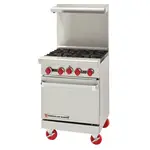
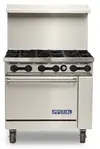
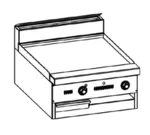
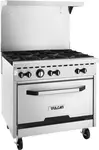

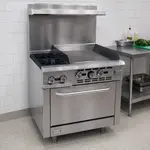


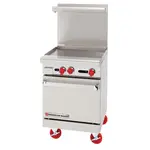

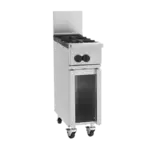


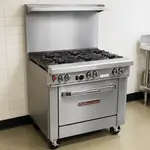

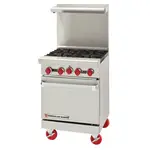

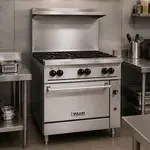


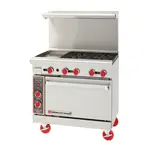

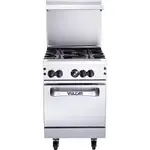











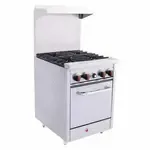


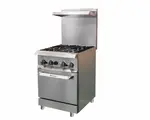
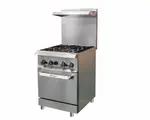
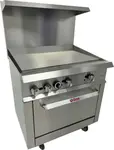
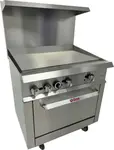
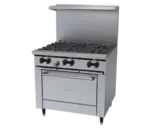
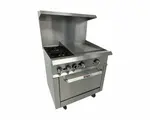
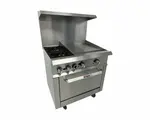


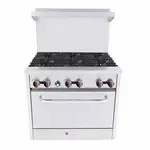

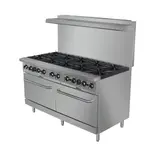
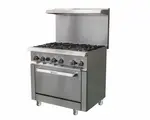
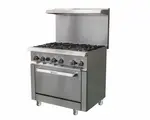


Top-Rated Restaurant Gas Ranges
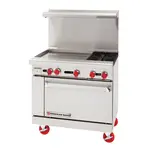
- View Product: Garland US Range Garland/US Range X60-6R24RR Restaurant Gas Range, 60" W with 6 Burners (1) 24" Raised Griddle/Broiler and (2) Standard Ovens - 289,500 BTU
X60-6R24RR
Garland US Range
Garland US Range Garland/US Range X60-6R24RR Restaurant Gas Range, 60" W with 6 Burners (1) 24" Raised Griddle/Broiler and (2) Standard Ovens - 289,500 BTU
$5,499.00Call us for pricing
- View Product: Falcon AR60-24RB Restaurant Range$3,684.15
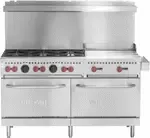
- View Product: Garland US Range Garland/US Range X60-10RR Restaurant Gas Range, 60" W with 10 Burners and (2) Standard Ovens - 366,000 BTU
X60-10RR
Garland US Range
Garland US Range Garland/US Range X60-10RR Restaurant Gas Range, 60" W with 10 Burners and (2) Standard Ovens - 366,000 BTU
$4,499.00Call us for pricing
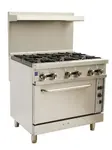
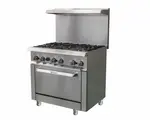
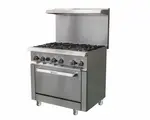
- View Product: Garland US Range Garland/US Range X36-6R Restaurant Gas Range, 36" W with 6 Burners and Standard Oven - 213,000 BTU
X36-6R
Garland US Range
Garland US Range Garland/US Range X36-6R Restaurant Gas Range, 36" W with 6 Burners and Standard Oven - 213,000 BTU
$2,329.00Call us for pricing
- View Product: Falcon AR36-24R Restaurant Range$2,145.15
- View Product: Southbend S36D Restaurant Gas Range, with 6 Burners and Standard Oven - 203,000 BTU$2,618.00
- View Product: Falcon AR24-4 Restaurant Range$1,524.15
- View Product: Falcon AR36-6 Restaurant Range$1,327.32
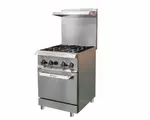
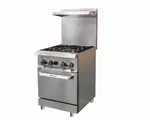
- View Product: Garland US Range Garland/US Range X24-4L Restaurant Gas Range, 24" W with 4 Burners and Space Saver Oven - 145,000 BTU
X24-4L
Garland US Range
Garland US Range Garland/US Range X24-4L Restaurant Gas Range, 24" W with 4 Burners and Space Saver Oven - 145,000 BTU
$2,189.00Call us for pricing
- View Product: Wolf C36S-6B Restaurant Gas Range, with 6 Burners and Standard Oven - 215,000 BTU$4,420.00
Call us for pricing
What customers say about our Restaurant Gas Ranges
99 verified customer reviews across 49 Restaurant Gas Ranges
Popular Brands for Restaurant Gas Ranges


Restaurant Gas Ranges FAQs
What size restaurant gas range do I need?
How many BTUs should restaurant range burners have?
Can a restaurant gas range run on propane?
Should I choose a standard oven or a convection oven base?
What is the difference between a restaurant range and a heavy-duty range?
Can I get a gas range with a griddle or broiler?
Does a commercial gas range need a hood?
How do I maintain a restaurant gas range?
Restaurant Gas Range Buying Guide
Restaurant gas ranges (also sold as standard-duty or medium-duty ranges) are the most common stove in American kitchens: 25,000–35,000 BTU open burners over a standard or convection oven, in 24", 36", 48" and 60" widths. Choices run from the four-burner Vulcan Endurance and Southbend S-Series to ten-burner double-oven Garland, Imperial and Wolf models.
Choosing Width and Burner Count
Each 12" of range width holds two open burners. A 24" range with four burners suits food trucks, cafes and small prep lines; a 36" six-burner range is the workhorse of most independent restaurants. Full-service kitchens usually choose 48" or 60" ranges with eight to ten burners, often with two ovens underneath, and 72" models serve high-volume lines that need twelve burners or a mix of burners and griddle in one footprint. Measure the space under your hood and leave clearance on both sides before choosing a width.
Burner Output and Top Configurations
Open burners typically deliver 25,000 to 35,000 BTU each; higher output speeds boiling and searing, while low-simmer settings protect sauces. Most ranges in this category can be ordered with a 12" or 24" griddle, a raised griddle/broiler or a hot top in place of burners. Look for:
- Cast iron grates in removable sections that are easy to lift and clean.
- Standing pilots or electronic ignition, depending on whether you want simple controls or lower idle gas use.
- Pull-out crumb trays and drip pans that slide out from the front.
Oven Base Options
- Standard ovens use natural convection and suit roasting, braising and baking casseroles.
- Convection ovens add a fan for faster, more even baking and higher sheet-pan capacity.
- Storage or cabinet bases replace the oven with open shelving for pans and sheet trays when a separate oven handles baking.
Natural Gas or Propane
Nearly every model ships natural gas with a propane conversion kit or can be ordered for propane from the factory. Confirm the fuel type, total BTU rating and gas connection size before ordering, and have a licensed installer set the regulator and make the conversion. Look for CSA or ETL listing for gas safety and NSF certification for sanitation, which most health inspectors expect.
Installation and Ventilation
Gas ranges must sit under a commercial exhaust hood with a fire suppression system that covers the full cooking surface. Plan for a flexible gas connector with a quick disconnect and restraining cable, and casters or adjustable legs so the range can be pulled out for cleaning. Check minimum clearances to combustible walls in the spec sheet.
Restaurant Range or Heavy-Duty Range
If your line runs more than 12 hours a day or you want a modular battery, step up to heavy-duty gas ranges; if you have no gas line, compare restaurant electric ranges. For an extra burner or two without an oven, see countertop ranges. The commercial ranges guide covers sizing, base styles, hood requirements and brand differences.
Care and Maintenance
Wipe down grates and the griddle at the end of each shift, empty crumb trays daily, and clean burner ports with a wire brush to keep flames even and blue. Schedule a yearly inspection of valves, thermostats and pilots. Related categories: gas/electric restaurant ranges and stock pot ranges. For replacement parts, see range parts and accessories and burner parts and accessories.
Need Help Choosing Restaurant Gas Ranges?
Our equipment experts are here to help you find the perfect solution.