Commercial Deep Fryers
CKitchen carries 900+ commercial deep fryers from Pitco, Frymaster, Vulcan, Dean, Imperial, Henny Penny and BKI: gas floor fryers, electric floor fryers, countertop fryers, multiple-battery fryer systems, pressure fryers, ventless fryers and drop-in fryers. Every fryer ships free with the full factory warranty and our low-price guarantee. Not sure which one fits? Our equipment specialists can size a fryer to your menu, volume and hood.
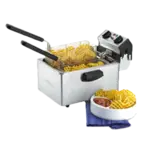
- View Product: Waring WDF75RC 8.5 lb. Electric Countertop Deep Fryer with Timer$245.68
Call us for pricing
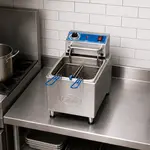
- View Product: Globe PF10E 10 lb. Electric Countertop Fryer, 120V$672.00
- View Product: Waring WDF1000 10 lb. Electric Countertop Deep Fryer with Timer$369.13
Call us for pricing
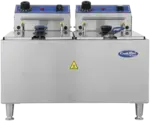
- View Product: Globe PF32E Dual Pot 32 lb. Electric Countertop Fryer$1,410.00
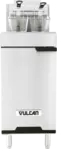
- View Product: Vulcan LG300 Gas Floor Model Full Pot Fryer with Millivolt Thermostatic Controls - 90,000 BTU
LG300
Vulcan
Vulcan LG300 Gas Floor Model Full Pot Fryer with Millivolt Thermostatic Controls - 90,000 BTU
$1,142.00Call us for pricing
- View Product: Pitco SG14-S Solstice Series 15 - 50 lb. Gas Floor Model Full Pot Fryer with Millivolt Controls - 110,000 BTU$3,072.00
- View Product: Globe PF16E 16 lb. Electric Countertop Fryer$798.00
- View Product: Admiral Craft BDGF-150/NG Black Diamond 51 - 90 lb. Gas Floor Model Full Pot Fryer with Thermostatic Controls - 150,000 BTU
BDGF-150/NG
Admiral Craft
Admiral Craft BDGF-150/NG Black Diamond 51 - 90 lb. Gas Floor Model Full Pot Fryer with Thermostatic Controls - 150,000 BTU
$1,300.00 - View Product: Vulcan 1GR85M 51 - 90 lb. Gas Floor Model Full Pot Fryer with Millivolt Thermostatic Controls - 150,000 BTU
1GR85M
Vulcan
Vulcan 1GR85M 51 - 90 lb. Gas Floor Model Full Pot Fryer with Millivolt Thermostatic Controls - 150,000 BTU
$6,357.00Call us for pricing
- View Product: Frymaster GF40 15 - 50 lb. Gas Floor Model Full Pot Fryer with Millivolt Controls - 122,000 BTU
GF40
Frymaster
Frymaster GF40 15 - 50 lb. Gas Floor Model Full Pot Fryer with Millivolt Controls - 122,000 BTU
$2,203.74Call us for pricing
- View Product: Admiral Craft BDGF-120/NG Black Diamond 15 - 50 lb. Gas Floor Model Full Pot Fryer with Thermostatic Controls - 120,000 BTU
BDGF-120/NG
Admiral Craft
Admiral Craft BDGF-120/NG Black Diamond 15 - 50 lb. Gas Floor Model Full Pot Fryer with Thermostatic Controls - 120,000 BTU
$1,100.00 - View Product: Star 530TF Star-Max Dual Pot 15 lb. Electric Countertop Fryer$2,742.00
- View Product: Admiral Craft BDGF-90/LPG Black Diamond 15 - 50 lb. Gas Floor Model Full Pot Fryer with Thermostatic Controls - 90,000 BTU
BDGF-90/LPG
Admiral Craft
Admiral Craft BDGF-90/LPG Black Diamond 15 - 50 lb. Gas Floor Model Full Pot Fryer with Thermostatic Controls - 90,000 BTU
$976.00 - View Product: Vulcan LG500 51 - 90 lb. Gas Floor Model Full Pot Fryer with Millivolt Thermostatic Controls - 150,000 BTU
LG500
Vulcan
Vulcan LG500 51 - 90 lb. Gas Floor Model Full Pot Fryer with Millivolt Thermostatic Controls - 150,000 BTU
$1,664.00Call us for pricing
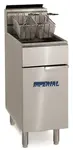
- View Product: Imperial IFS-50-E 50 lb. Electric Floor Fryer with Snap Action Thermostat$7,943.00
Call us for pricing
- View Product: Vulcan LG400 15 - 50 lb. Gas Floor Model Full Pot Fryer with Millivolt Thermostatic Controls - 120,000 BTU
LG400
Vulcan
Vulcan LG400 15 - 50 lb. Gas Floor Model Full Pot Fryer with Millivolt Thermostatic Controls - 120,000 BTU
$1,432.00Call us for pricing
- View Product: Imperial IFS-40-E 40 lb. Electric Floor Fryer with Snap Action Thermostat$2,369.00
Call us for pricing
- View Product: Frymaster MJ1CF Performance 80 lb. Open-Pot Gas Floor Fryer for Chicken & Fish - 150,000 BTU
MJ1CF
Frymaster
Frymaster MJ1CF Performance 80 lb. Open-Pot Gas Floor Fryer for Chicken & Fish - 150,000 BTU
$6,106.59Call us for pricing
- View Product: Admiral Craft BDGF-90/NG Black Diamond 15 - 50 lb. Gas Floor Model Full Pot Fryer with Thermostatic Controls - 90,000 BTU
BDGF-90/NG
Admiral Craft
Admiral Craft BDGF-90/NG Black Diamond 15 - 50 lb. Gas Floor Model Full Pot Fryer with Thermostatic Controls - 90,000 BTU
$976.00 - View Product: Globe GF30G Fryer$2,611.00
- View Product: Star Mfg. 515F Star-Max Fryer$1,738.00
- View Product: Wells LLF-14 Electric 14 lb. 2 Half-Basket Countertop Fryer$1,817.00
- View Product: Star Mfg. 301HLF QUIK-SHIP Star-Max Fryer$2,463.00
- View Product: Pitco SFSGLVRF Solstice Supreme™ 51 - 90 lb. Gas Floor Model Full Pot Fryer with Computer Controls - 125,000 BTU
SFSGLVRF
Pitco
Pitco SFSGLVRF Solstice Supreme™ 51 - 90 lb. Gas Floor Model Full Pot Fryer with Computer Controls - 125,000 BTU
$34,253.00 - View Product: Imperial IFS-50-OP 15 - 50 lb. Gas Floor Model Full Pot Fryer with Thermostatic Controls - 140,000 BTU
IFS-50-OP
Imperial
Imperial IFS-50-OP 15 - 50 lb. Gas Floor Model Full Pot Fryer with Thermostatic Controls - 140,000 BTU
$7,285.00Call us for pricing
- View Product: Vulcan 1TR45A PowerFry3 15 - 50 lb. Gas Floor Model Full Pot Fryer with Solid State Controls - 70,000 BTU
1TR45A
Vulcan
Vulcan 1TR45A PowerFry3 15 - 50 lb. Gas Floor Model Full Pot Fryer with Solid State Controls - 70,000 BTU
$9,873.00Call us for pricing
- View Product: Pitco SG14T-S Solstice™ Fryer$11,404.00
- View Product: Admiral Craft BDGF-150/LPG Black Diamond 51 - 90 lb. Gas Floor Model Full Pot Fryer with Thermostatic Controls - 150,000 BTU
BDGF-150/LPG
Admiral Craft
Admiral Craft BDGF-150/LPG Black Diamond 51 - 90 lb. Gas Floor Model Full Pot Fryer with Thermostatic Controls - 150,000 BTU
$1,300.00 - View Product: Frymaster 11814E 60 lb. Oil-Conserving Electric Floor Fryer$12,087.02
Call us for pricing
- View Product: Admiral Craft BDGF-120/LPG Black Diamond 15 - 50 lb. Gas Floor Model Full Pot Fryer with Thermostatic Controls - 120,000 BTU
BDGF-120/LPG
Admiral Craft
Admiral Craft BDGF-120/LPG Black Diamond 15 - 50 lb. Gas Floor Model Full Pot Fryer with Thermostatic Controls - 120,000 BTU
$1,100.00 - View Product: Wells F-1725 Fryer$6,874.00
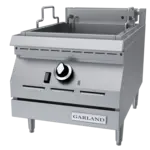
- View Product: Garland US Range Garland ED-15F Designer Series 15" Electric Countertop Fryer
ED-15F
Garland US Range
Garland US Range Garland ED-15F Designer Series 15" Electric Countertop Fryer
$3,780.00Call us for pricing
- View Product: Star Mfg. 530FF Star-Max Fryer$2,770.00
- View Product: Falcon AF-90/NG-2000 40 lb. Natural Gas Floor Fryer, 90,000 BTU, 2000 ft. Elevation
AF-90/NG-2000
Falcon
Falcon AF-90/NG-2000 40 lb. Natural Gas Floor Fryer, 90,000 BTU, 2000 ft. Elevation
$823.09 - View Product: Falcon AF-120/NG-4500 40-50 lb. Natural Gas Floor Fryer, 120,000 BTU, 4500 ft. Elevation
AF-120/NG-4500
Falcon
Falcon AF-120/NG-4500 40-50 lb. Natural Gas Floor Fryer, 120,000 BTU, 4500 ft. Elevation
$994.14 - View Product: Falcon AF-120/NG-2000 40-50 lb Gas Floor Fryer, 120,000 BTU, 2 Baskets, 2000' Elevation
AF-120/NG-2000
Falcon
Falcon AF-120/NG-2000 40-50 lb Gas Floor Fryer, 120,000 BTU, 2 Baskets, 2000' Elevation
$1,033.75 - View Product: Globe GF15PG Fryer$2,339.00
- View Product: Globe GF15G Fryer$2,339.00
- View Product: Globe GF30PG Fryer$2,611.00
- View Product: Vollrath CF2-1800-C 10 lb. Single Well Electric Countertop Fryer, 120V$578.75
- View Product: Vollrath CF2-1800 10 lb. Single Well Electric Countertop Fryer, 120V$578.75
- View Product: Vollrath CF2-3600-C 10 lb. Single Well Electric Countertop Fryer, 208-240V$578.75
- View Product: Vollrath CF2-3600 10 lb. Single Well Electric Countertop Fryer, 208-240V$578.75
- View Product: Vollrath CF4-3600-C Fryer$945.05
- View Product: Vollrath CF4-3600 15 lb. Single Well Electric Countertop Fryer, 208-240V$945.05
- View Product: Vollrath CF2-3600DUAL-C Fryer$988.50
- View Product: Vollrath CF2-1800DUAL Dual Well 10 lb. Electric Countertop Fryer, 120V$988.50
- View Product: Vollrath CF2-1800DUAL-C Fryer$988.50
- View Product: Vollrath CF2-3600DUAL Dual Well 10 lb. Electric Countertop Fryer, 208-240V$988.50
- View Product: Vollrath CF4-3600DUAL Fryer$1,613.75
- View Product: Vollrath CF4-3600DUAL-C Fryer$1,613.75
- View Product: Global Solutions by Nemco GS1611-120 Deep Fryer$215.05
Call us for pricing
- View Product: Global Solutions by Nemco GS1610 Deep Fryer 10 lb fat capacity$174.90
Call us for pricing
- View Product: Global Solutions by Nemco GS1611 Deep Fryer 16 lb fat capacity$215.05
Call us for pricing
- View Product: Admiral Craft DF6LS Adcraft Electric Deep Fryer$299.99
- View Product: Winco EFS-16 Deep Fryer$279.92
- View Product: Admiral Craft DF6L2S Dual Tank Electric Deep Fryer$399.99
- View Product: Eurodib USA SFE01820 0.5 Gallon Single Well Electric Countertop Fryer, 120V$634.91
- View Product: Admiral Craft DF-12L Adcraft Fryer$399.99
- View Product: Admiral Craft DF12LS Adcraft Fryer$399.99
- View Product: Eurodib USA SFE01860D-240 8-1/2 Qt. Single Well Electric Countertop Fryer with 2 Baskets, 240V
SFE01860D220
Eurodib
Eurodib USA SFE01860D-240 8-1/2 Qt. Single Well Electric Countertop Fryer with 2 Baskets, 240V
$776.40 - View Product: Global Solutions by Nemco GS1612-120 Deep Fryer$413.05
Call us for pricing
- View Product: Global Solutions by Nemco GS1612 Deep Fryer 31 lb fat capacity$413.05
Call us for pricing
- View Product: Eurodib USA SFE01860D-120 8-1/2 Qt. Single Well Electric Countertop Fryer with 2 Baskets, 120V
SFE01860D120
Eurodib
Eurodib USA SFE01860D-120 8-1/2 Qt. Single Well Electric Countertop Fryer with 2 Baskets, 120V
$776.40 - View Product: Eurodib USA SFE01860-120 2 Gallon Single Well Electric Countertop Fryer, 120V$781.43
- View Product: Eurodib USA SFE01860-240 2 Gallon Single Well Electric Countertop Fryer, 240V$781.43
- View Product: Waring WDF1300 Commercial Deep Fryer$562.00
Call us for pricing
- View Product: Admiral Craft DF12L2S Double Deep Fryer$699.99
- View Product: Atosa ACEF-10 10 lb. Electric Countertop Fryer, 120V$577.00
- View Product: Winco EFT-32 Deep Fryer$529.96
- View Product: Waring WDF1700 Commercial Deep Fryer$687.00
Call us for pricing
- View Product: Atosa ACEF-16 16 lb. Electric Countertop Fryer$721.00
- View Product: BakeMAX BMFE010 Single Mini Countertop Fryer$664.00
- View Product: Admiral Craft BDGF-ES35/NG Black Diamond 35 lb Natural Gas Floor Model Fryer, 65,000 BTU
BDGF-ES35/NG
Admiral Craft
Admiral Craft BDGF-ES35/NG Black Diamond 35 lb Natural Gas Floor Model Fryer, 65,000 BTU
$1,051.00 - View Product: Admiral Craft BDGF-ES35-LP Black Diamond 35 lb LP Gas Floor Model Fryer, 65,000 BTU
BDGF-ES35-LP
Admiral Craft
Admiral Craft BDGF-ES35-LP Black Diamond 35 lb LP Gas Floor Model Fryer, 65,000 BTU
$1,050.99 - View Product: Blue Air BLF3-NG 40 lb Natural Gas Floor Model Fryer, 3 Tube Burners, 90,000 BTU$1,048.55
- View Product: Blue Air BLF3-LPG 40 lb LP Gas Floor Model Fryer, 3 Tube Burners, 90,000 BTU$1,048.55
- View Product: Atosa ATFS-40ES-NG 40 lb. Natural Gas Floor Fryer with Manual Controls, ENERGY STAR
ATFS-40ES-NG
Atosa
Atosa ATFS-40ES-NG 40 lb. Natural Gas Floor Fryer with Manual Controls, ENERGY STAR
$1,068.00 - View Product: Atosa ATFS-40ES-LP 40 lb LP Gas Floor Model Fryer with Manual Control, 3 Burners$1,068.00
- View Product: IKON IGF-35/40-NG Gas Floor Model Full Pot Fryer$1,042.29
- View Product: IKON IGF-35/40-LP Gas Floor Model Full Pot Fryer$1,042.29
- View Product: Pitco 35C+S Gas Floor Model Full Pot Fryer$1,195.00
- View Product: Eagle EF10-120-X RedHots 15 lb. Electric Countertop Fryer, 120V$1,059.59
- View Product: IKON IGF-40/50-NG Gas Floor Model Full Pot Fryer$1,144.08
- View Product: IKON IGF-40/50-LP Gas Floor Model Full Pot Fryer$1,144.08
- View Product: Wolf WF300-QS-COMMANDER Gas Floor Model Full Pot Fryer$1,185.00
Call us for pricing
- View Product: Blue Air BLF4-NG 50 lb Natural Gas Floor Model Fryer, 4 Tube Burners, 120,000 BTU$1,302.08
- View Product: Blue Air BLF4-LPG 50 lb LP Gas Floor Model Fryer, 4 Tube Burners, 120,000 BTU$1,302.08
- View Product: Imperial EFS-40 40 lb. Gas Floor Model Full Pot Fryer with Thermostatic Controls - 105,000 BTU
EFS-40
Imperial
Imperial EFS-40 40 lb. Gas Floor Model Full Pot Fryer with Thermostatic Controls - 105,000 BTU
$1,099.00Call us for pricing
- View Product: Atosa ATFS-50-LP CookRite 50 lb. Propane Gas Floor Fryer with Millivolt Control$1,341.00
- View Product: Winco NGGF-40-NG Spectrum 40 lb Natural Gas Floor Model Fryer with Thermostatic Controls, 90,000 BTU
NGGF-40-NG
Winco
Winco NGGF-40-NG Spectrum 40 lb Natural Gas Floor Model Fryer with Thermostatic Controls, 90,000 BTU
$1,139.37 - View Product: Winco NGGF-40-LP Spectrum 40 lb LP Gas Floor Model Fryer with Thermostatic Controls, 90,000 BTU
NGGF-40-LP
Winco
Winco NGGF-40-LP Spectrum 40 lb LP Gas Floor Model Fryer with Thermostatic Controls, 90,000 BTU
$1,139.37 - View Product: Vulcan LG300-QS-PLATINUM Gas Floor Model Full Pot Fryer$1,392.00
Call us for pricing
- View Product: Atosa ACEF-32 32 lb. Electric Countertop Fryer$1,261.00
- View Product: IKON IEF-50 50 lb. Electric Floor Model Open Pot Fryer$1,274.98
- View Product: Atosa ATFS-50ES-LP 50 lb LP Gas Floor Model Fryer with Manual Control, 4 Burners$1,341.00
- View Product: Atosa ATFS-50ES-NG 50 lb Natural Gas Floor Model Fryer with Manual Control, 4 Burners
ATFS-50ES-NG
Atosa
Atosa ATFS-50ES-NG 50 lb Natural Gas Floor Model Fryer with Manual Control, 4 Burners
$1,341.00 - View Product: BakeMAX BMFE020 Double Mini Countertop Fryer$1,235.00
- View Product: Eagle EF10-120 RedHots 15 lb. Electric Countertop Fryer, 120V$1,243.93
- View Product: Vulcan 1VEG35M 15 - 50 lb. Gas Floor Model Full Pot Fryer with Millivolt Thermostatic Controls - 70,000 BTU
1VEG35M
Vulcan
Vulcan 1VEG35M 15 - 50 lb. Gas Floor Model Full Pot Fryer with Millivolt Thermostatic Controls - 70,000 BTU
$1,339.00Call us for pricing





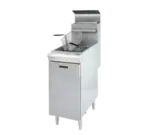


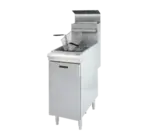

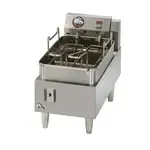

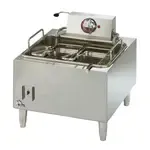










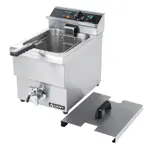
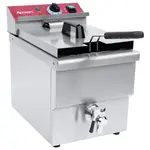

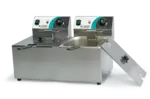


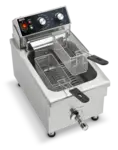

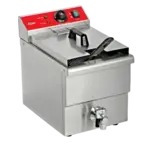
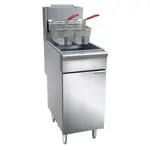
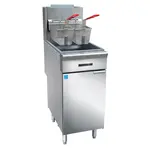









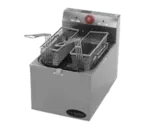

Top-Rated Fryers
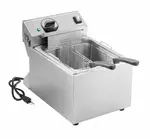
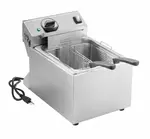
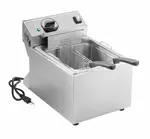
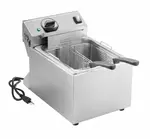
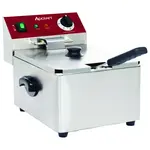
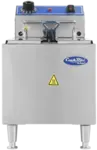
- View Product: Waring WDF75RC 8.5 lb. Electric Countertop Deep Fryer with Timer$245.68
Call us for pricing
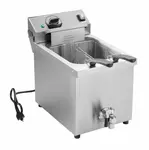
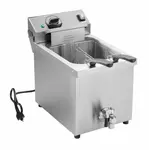
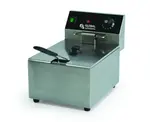
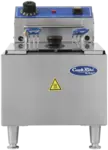
- View Product: Globe PF10E 10 lb. Electric Countertop Fryer, 120V$672.00
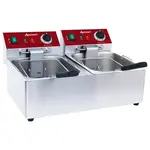
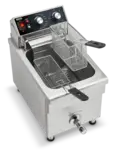
- View Product: Waring WDF1000 10 lb. Electric Countertop Deep Fryer with Timer$369.13
Call us for pricing
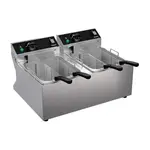
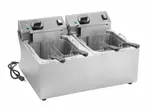
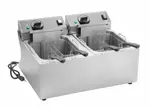
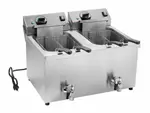
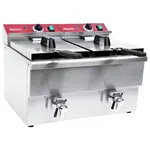
- View Product: Globe PF32E Dual Pot 32 lb. Electric Countertop Fryer$1,410.00
What customers say about our Fryers
166 verified customer reviews across 43 Fryers
Popular Brands for Commercial Deep Fryers


Fryers FAQs
What size commercial fryer do I need?
Is a gas or electric commercial fryer better?
What is the difference between open-pot, tube and flat-bottom fryers?
Do commercial fryers need a hood?
How often should I filter and change fryer oil?
What is a pressure fryer and who needs one?
How much does a commercial fryer cost?
Which commercial fryer brands are the most reliable?
Commercial Fryer Buying Guide
A commercial deep fryer is the busiest station in most kitchens: fries, wings, chicken, fish, onion rings, donuts and appetizers all come out of it, and a fryer that recovers slowly or burns oil early shows up straight in food cost.
CKitchen stocks more than 900 commercial fryers from Pitco, Frymaster, Vulcan, Dean, Imperial, Henny Penny, BKI, Globe and Waring, with free shipping and a low-price guarantee on every model. This guide explains how to narrow the choice by fuel, size, pot style and application.
Commercial Fryer Types at a Glance
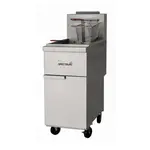
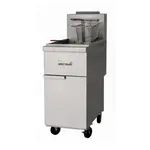
- Gas floor fryers – the restaurant standard. 35 to 90 lb oil capacity per vat, 70,000 to 150,000 BTU, fastest recovery and lowest operating cost where gas is available.
- Electric floor fryers – precise thermostats, no flue, and the choice for sites without gas or under ventless hoods. 208 or 240 V, 14 to 22 kW per vat.
- Countertop fryers – 10 to 40 lb units on 120 V or 208/240 V for bars, concession stands, food trucks and light-duty frying.
- Gas and electric multiple-battery fryers – two to six vats on a common base with a built-in filtration system; the setup for quick-service and high-volume lines.
- Pressure fryers – sealed lids cook bone-in chicken faster at lower temperatures with less oil absorption. Henny Penny, BKI and Winston lead.
- Ventless fryers – self-contained hood and filtration, UL-listed to run without a Type I hood in kiosks, bars, stadiums and convenience stores.
- Drop-in fryers – built into a counter or serving line where a floor model will not fit.
- Oil filtration, dump stations, baskets and breading stations – the equipment around the fryer that extends oil life and keeps the station moving.
Gas vs. Electric Commercial Fryers
Gas fryers cost less to run in most US markets, reach frying temperature faster and recover faster between loads, which is why they dominate restaurants and quick-service kitchens. They need a 3/4" gas line and a Type I hood, and most ship for natural gas with a propane conversion kit available.
Electric fryers heat the oil directly with immersed elements, so they are more energy-efficient at the vat, hold temperature within a few degrees and need no flue. They are the default for countertop units, for buildings without gas, and in jurisdictions that restrict open flame. Check voltage and phase (120 V, 208 V, 240 V or 480 V, single or three phase) before you order; electric fryers cannot be converted after purchase. Compare the two on their own pages: commercial gas fryers and commercial electric fryers.
How to Size a Commercial Fryer
Fryers are rated by oil capacity in pounds and by output in pounds of fries per hour. A 40 lb fryer produces roughly 60 to 70 lb of fries an hour and suits most independent restaurants; 50 lb units handle 80 to 100 lb an hour for busy diners and pubs; 75 to 90 lb vats serve high-volume chicken and seafood operations.
When demand outruns a single vat, add vats rather than oversizing: a two- or three-vat battery lets you dedicate oil to fries, proteins and seafood so flavors do not cross, and a built-in filtration cabinet keeps every vat cycling fresh oil. Countertop fryers at 10 to 30 lb are for appetizers and low volume only. Allow 6" of clearance to open flame on either side and plan the hood to cover the total BTU of the battery.
Open Pot, Tube and Flat-Bottom Fryers
Open-pot fryers have no obstructions in the vat, drain and clean easily and recover quickly; they are the all-rounder for fries and lightly breaded items. Tube-type fryers run gas tubes through the oil with a deep cold zone beneath, so sediment from heavily breaded chicken, fish and onion rings drops out of the cooking oil and the oil lasts longer.
Flat-bottom fryers have a shallow, wide vat with no cold zone for free-floating items like funnel cakes, tempura, tortilla chips and donuts. Pitco Solstice, Frymaster Performance and Vulcan GR series all offer open-pot and tube designs; filter by brand or pot style on the gas and electric fryer pages.
Features Worth Paying For
Built-in filtration is the single biggest money saver on a floor fryer: filtering every shift can double oil life, which on a 40 lb vat is hundreds of dollars a month. Look for solid-state or computer controls with programmable cook cycles and melt modes, basket lifts for consistency and labor, high-limit safety thermostats, and high-efficiency burners or elements that cut gas or power use by 25 to 40 percent (and often qualify for utility rebates under ENERGY STAR).
Oil-conserving reduced-capacity vats such as Frymaster FilterQuick and Pitco ROV fry the same output with 30 percent less oil. Casters and quick-disconnect gas lines make cleaning behind the line a one-person job.
Shop Commercial Fryers by Brand
Every fryer on this page is sold by CKitchen as an authorized dealer, so factory warranties apply. Pitco and Frymaster are the two names most chains standardize on, with the deepest lines in gas, electric and filtration; Vulcan and Dean cover restaurant-duty gas and electric floor fryers at value prices.
Imperial and American Range build heavy-gauge gas fryers to match their range lines; Henny Penny, BKI and Winston own the pressure-fryer market; and Waring, Globe, Star and Admiral Craft lead countertop fryers. Use the brand filter on any fryer category to compare a single manufacturer’s line.
Fryer Parts, Oil Management and Related Equipment
Keep the station running with portable oil filtration machines, oil shuttles and disposal carts, filter paper, powder and fryer parts and fryer cleaning brushes.
Finish the line with a fry dump station and holding warmer and a batter and breading station. For the rest of the hot line, see commercial ranges, griddles and grills and all commercial cooking equipment.
Why Buy Commercial Fryers from CKitchen
CKitchen is a family-run foodservice equipment dealer with more than 30 years in the business. Every commercial fryer ships free, carries the full manufacturer warranty and is backed by our low-price guarantee.
Our equipment specialists can size a fryer or battery to your menu, confirm gas, electrical and hood requirements, and quote installation and extended warranty options. Call us or start a chat for a quote, or use the products above to compare commercial fryers by fuel, size and brand.
Need Help Choosing Fryers?
Our equipment experts are here to help you find the perfect solution.