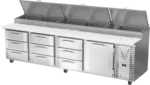
Best Pizza Prep Table: How to Choose the Right Pizza Prep Refrigerator for Your Restaurant

- Quick Answer: What Is the Best Pizza Prep Table?
- Types of Pizza Prep Tables Explained
- Standard Pizza Prep Tables
- Pizza Prep Tables with Drawers
- Mega Top Pizza Prep Tables
- Pizza Prep Table vs Sandwich Prep Table
- Best Pizza Prep Table by Use Case
- Budget: How Much Does a Pizza Prep Table Cost?
- What Size Pizza Prep Table Do Most Restaurants Choose?
- 48"–60" Pizza Prep Tables
- 67"–72" Pizza Prep Tables (Most Popular Choice)
- 90"+ Pizza Prep Tables
- Quick Recommendation
- Common Buying Mistakes
- ❌ Buying Too Small
- ❌ Ignoring Workflow
- ❌ Choosing Wrong Type
- ❌ Underestimating Toppings
- Internal Equipment Strategy (IMPORTANT)
- What Should You Actually Choose?
- Best Pizza Prep Table Brands
- Top Brands to Consider
- True Refrigeration
- Turbo Air
- Beverage-Air
- Falcon
- Victory Refrigeration
- Ampto
- Blue Air
- Where to Place Your Pizza Prep Table
- How Long Does a Pizza Prep Table Last?
- FAQ
- What is a pizza prep table?
- What size pizza prep table do I need?
- Can I use a sandwich prep table for pizza?
- How many toppings can a pizza prep table hold?
- What is the best pizza prep table for small restaurants?
- Final Thoughts
A pizza prep table is one of the most important pieces of commercial kitchen equipment in any pizzeria. It directly impacts speed, organization, ingredient freshness, and overall kitchen workflow. It also plays a critical role in maintaining food safety standards by keeping ingredients at consistent temperatures throughout service. In high-volume environments, a well-designed prep station can significantly reduce preparation time and improve staff efficiency during peak hours.
If you’re searching for the best pizza prep table, the key isn’t just picking a model — it’s choosing the right pizza prep table refrigerator based on your menu, volume, and kitchen layout.
This guide will help you choose the right commercial pizza prep table, avoid common mistakes, and make a confident buying decision.
Quick Answer: What Is the Best Pizza Prep Table?
The best pizza prep table depends on your operation:
- Small pizzeria → 48"–60" refrigerated pizza prep table
- Medium restaurant → 67"–72" pizza prep refrigerator
- High-volume kitchen → 93"+ unit with drawers and large topping rail
👉 Most restaurants should choose a refrigerated pizza prep table with topping rail and at least 2–3 doors for balanced capacity and workflow.
Pizza Prep Table Comparison (Quick Overview)
| Type | Best For | Size | Storage | Pros | Cons |
|---|---|---|---|---|---|
| 2-Door Pizza Prep Table | Small restaurants | 48"–60" | Moderate | Compact, affordable | Limited capacity |
| 3-Door Pizza Prep Table | Medium pizzerias | 67"–72" | High | Balanced size & capacity | More space required |
| 4-Door Pizza Prep Table | High-volume kitchens | 90"+ | Very high | Maximum storage | Higher cost |
What Is a Pizza Prep Table?
A pizza prep table refrigerator is a specialized refrigerated workstation designed to:
- store ingredients below
- keep toppings chilled above (topping rail)
- provide workspace for assembling pizzas
Unlike standard prep tables, pizza prep units are deeper and optimized for dough handling and high topping volume.
Types of Pizza Prep Tables Explained
Not all pizza prep tables are the same. Understanding the different configurations will help you choose the right model for your kitchen workflow.
Standard Pizza Prep Tables
These are the most common units found in pizzerias.
- feature a refrigerated base
- include a topping rail
- offer a large cutting surface
👉 Best for most restaurants and medium-volume operations.
Pizza Prep Tables with Drawers
Instead of doors, these units use drawers for storage.
- easier ingredient organization
- faster access during service
- better for high-volume kitchens
👉 Ideal for busy kitchens where speed matters.
Mega Top Pizza Prep Tables
These models offer extra topping capacity.
- more ingredient pans
- larger prep area
- better for complex menus
👉 Best for high-volume or specialty pizza restaurants.
Pizza Prep Table vs Sandwich Prep Table
This is a common question.
| Feature | Pizza Prep Table | Sandwich Prep Table |
|---|---|---|
| Workspace Depth | Deeper surface for dough handling | Shallower workspace |
| Topping Capacity | Holds more ingredient pans | Limited pan capacity |
| Best Use | Pizza preparation | Sandwiches, salads |
| Ingredient Access | Designed for fast pizza assembly | Standard access for general prep |
| Efficiency for Pizzerias | Highly optimized | Less efficient for pizza workflow |
Best Pizza Prep Table by Use Case
This is the most important section for decision-making.
Best for Small Pizzerias
- 48"–60" unit
- 2-door configuration
- Standard topping rail
👉 Ideal for:
- low to medium volume
- limited kitchen space
Best for Medium Restaurants
- 67"–72" unit
- 3-door configuration
- larger topping capacity
👉 Best balance between:
- space
- storage
- performance
Best for High-Volume Kitchens
- 90"+ unit
- 4-door or drawer system
- expanded topping rail
👉 Required if:
- you serve 200+ pizzas daily
- multiple staff use the station
Best Budget Option
- smaller 2-door unit
- fewer pans
- basic features
👉 Lower upfront cost, but less scalable.
Key Features to Look For
1. Size & Dimensions
Common sizes:
- 48"
- 60"
- 72"
- 93"
👉 Always measure your space before buying.
2. Topping Rail Capacity
This determines how many ingredients you can store.
- Small units → 6–8 pans
- Large units → 10–12+ pans
👉 More toppings = faster service.
3. Refrigeration Performance
Look for:
- consistent temperature
- strong airflow system
- fast recovery after door opening
4. Storage Configuration
Options include:
- doors (most common)
- drawers (better organization)
👉 Drawers are ideal for high-volume kitchens.
5. Compressor Location
- Rear-mounted → easier access, more airflow
- Bottom-mounted → better for hot kitchens
How to Choose the Right Pizza Prep Table
Focus on 3 factors:
1. Volume
Ask:
- how many pizzas per day?
👉 Higher volume = larger unit
2. Menu Complexity
More toppings → larger topping rail
3. Kitchen Space
Limited space → under 60" unit
Pizza Prep Table Size Guide
| Restaurant Type | Recommended Size | Daily Output |
|---|---|---|
| Small Pizzeria | 48"–60" | Up to 100 pizzas/day |
| Medium Restaurant | 67"–72" | 100–200 pizzas/day |
| High Volume | 90"+ | 200+ pizzas/day |
Budget: How Much Does a Pizza Prep Table Cost?
Typical price ranges:
- Small units → $1,500 – $3,500
- Mid-range → $3,500 – $6,500
- High-end → $7,000 – $12,000+
👉 Price depends on:
- size
- brand
- features
What Size Pizza Prep Table Do Most Restaurants Choose?
Choosing the right size is one of the most important decisions when buying a pizza prep table. While there are many options available, most restaurants fall into a few common categories based on volume and kitchen space.
48"–60" Pizza Prep Tables
These smaller units are ideal for:
- small pizzerias
- low-volume operations
- kitchens with limited space
They typically support up to 100 pizzas per day and offer enough topping capacity for simple menus. However, they can become limiting as your business grows.
67"–72" Pizza Prep Tables (Most Popular Choice)
This is the most commonly used size in pizzerias.
- supports 100–200 pizzas per day
- provides a balanced topping rail capacity
- offers enough storage without taking excessive space
👉 For most restaurants, a 72" pizza prep table is the best overall choice.
90"+ Pizza Prep Tables
These large units are designed for:
- high-volume kitchens
- multi-station prep areas
- restaurants with extensive topping selections
They allow multiple staff members to work simultaneously and significantly improve workflow during peak hours.
Quick Recommendation
If you’re unsure:
- small operation → 60"
- standard pizzeria → 72"
- high-volume → 90"+
👉 This simple sizing approach works for the majority of restaurants and helps avoid costly mistakes.
Common Buying Mistakes
❌ Buying Too Small
Leads to:
- slower service
- overcrowded toppings
❌ Ignoring Workflow
Placement affects speed more than size.
❌ Choosing Wrong Type
Using sandwich prep tables instead of pizza units.
❌ Underestimating Toppings
Not enough pan capacity slows down operations.
Internal Equipment Strategy (IMPORTANT)
Your prep table should work with:
- pizza ovens
- dough mixers
- refrigeration units
👉 For a full setup, explore your restaurant equipment list and align your prep table with your kitchen layout.
What Should You Actually Choose?
If you’re unsure, follow this:
- Small space → 48" pizza prep table
- Standard pizzeria → 72" unit
- High-volume → 90"+ with drawers
👉 This simple rule covers most operations.
Best Pizza Prep Table Brands
Top Brands to Consider
Choosing a reliable brand ensures long-term performance and fewer breakdowns.
True Refrigeration
- premium build quality
- excellent temperature consistency
- long lifespan
👉 Best for high-end restaurants that need top-tier reliability.
Turbo Air
- energy-efficient designs
- advanced airflow systems
- modern features
👉 Great for operators looking for performance + efficiency.
Beverage-Air
- strong mid-range option
- reliable performance
- good price-to-quality ratio
👉 Ideal for most standard pizzerias.
Falcon
- budget-friendly
- simple and functional
- widely used in startups
👉 Best for new restaurants with limited budgets.
Victory Refrigeration
- heavy-duty construction
- excellent insulation
- consistent cooling performance
👉 Ideal for high-volume kitchens that need durability.
Ampto
- affordable pricing
- solid performance for the cost
- practical design
👉 Good option for small restaurants and budget-conscious buyers.
Blue Air
- modern design
- energy-efficient operation
- competitive pricing
👉 Great balance between affordability and performance.
Where to Place Your Pizza Prep Table
Placement has a major impact on efficiency.
Best practices:
- position near pizza ovens
- keep close to dough prep area
- ensure easy staff access
Poor placement leads to:
- slower service
- unnecessary movement
- bottlenecks
How Long Does a Pizza Prep Table Last?
A commercial pizza prep table typically lasts:
- 5–10 years with proper maintenance
Factors that affect lifespan:
- usage volume
- cleaning frequency
- compressor quality
Regular maintenance extends lifespan and ensures consistent performance.
FAQ
What is a pizza prep table?
A refrigerated workstation designed for storing toppings and assembling pizzas efficiently.
What size pizza prep table do I need?
Most restaurants need a 60"–72" unit depending on volume.
Can I use a sandwich prep table for pizza?
You can, but it’s not ideal due to smaller workspace and limited topping capacity.
How many toppings can a pizza prep table hold?
Typically 6–12 pans depending on size.
What is the best pizza prep table for small restaurants?
A 48"–60" refrigerated pizza prep table is usually sufficient.
Final Thoughts
Choosing the right pizza prep table is about more than size — it’s about efficiency, workflow, and long-term performance.
The best commercial pizza prep table is one that:
- matches your volume
- fits your space
- supports your menu
Investing in the right unit will improve speed, organization, and overall kitchen performance — making it one of the most important decisions in any pizzeria setup.