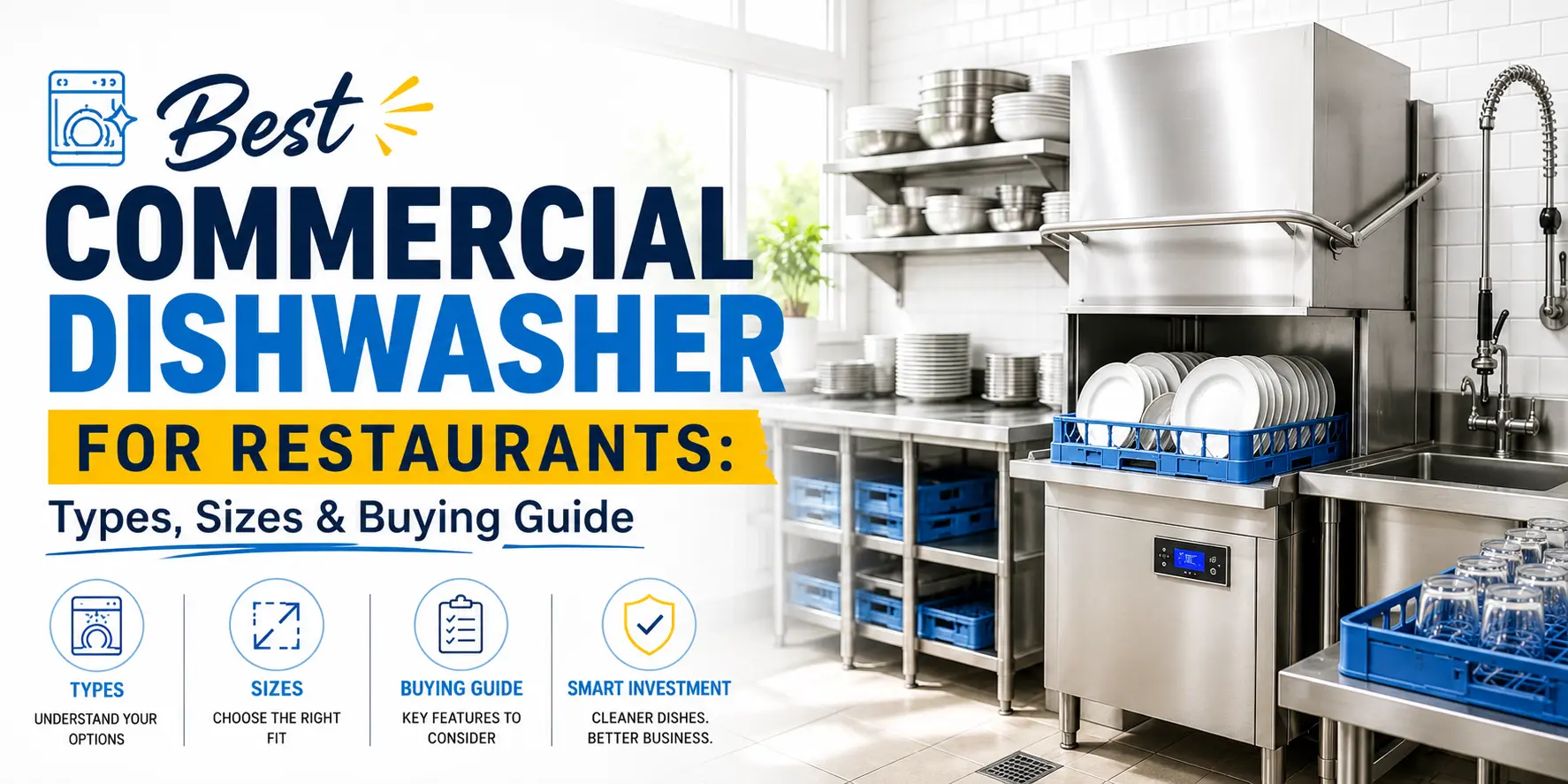
Best Commercial Dishwasher for Restaurants: Types, Sizes & Buying Guide

- Quick Answer: What Is the Best Commercial Dishwasher?
- Commercial Dishwasher Comparison Table
- What Size Commercial Dishwasher Do You Need?
- How Commercial Dishwashers Improve Labor Efficiency
- Commercial Dishwasher Requirements and Utilities
- How to Maintain a Commercial Dishwasher
- How Dishwashers Impact Kitchen Workflow
- How to Choose the Right Commercial Dishwasher
- How to Build an Efficient Dishwashing Station
- Dishwasher Layout and Kitchen Design
- FAQ
A commercial dishwasher is one of the most essential pieces of equipment in any restaurant. It directly impacts cleanliness, health code compliance, labor efficiency, and overall kitchen workflow. Choosing the right commercial dishwasher for your restaurant isn’t just about cleaning dishes — it’s about maintaining speed, consistency, and sanitation during peak service hours.
With multiple types, sizes, and configurations available, selecting the best restaurant dishwasher can feel overwhelming. This guide breaks down everything you need to know, including types of commercial dishwashers, key differences, costs, and how to choose the right system for your kitchen.
Quick Answer: What Is the Best Commercial Dishwasher?
The best commercial dishwasher depends on your restaurant size:
- Small restaurants → undercounter dishwasher
- Medium restaurants → door-type dishwasher
- High-volume kitchens → conveyor dishwasher
👉 For most restaurants, a door-type commercial dishwasher offers the best balance of speed, capacity, and cost.
Types of Commercial Dishwashers
Understanding the different types is the first step in building an effective restaurant dishwashing system.
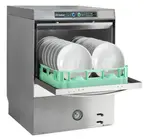
Undercounter Dishwashers
These are compact units designed to fit under a counter.
Key features:
- space-saving design
- easy installation
- suitable for smaller operations
Best for:
- cafés
- small restaurants
- bars
👉 Ideal for low to moderate dish volume.
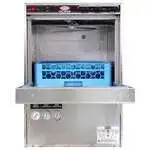
Door-Type Dishwashers (High Temp / Low Temp)
Also known as pass-through dishwashers, these are the most common in commercial kitchens.
Key features:
- higher capacity than undercounter models
- faster wash cycles
- supports continuous workflow
Best for:
- mid-size restaurants
- busy kitchens
👉 This is the most versatile option.
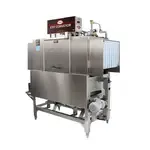
Conveyor Dishwashers
Designed for high-volume operations, these systems move racks through the machine automatically.
Key features:
- very high output
- continuous washing
- minimal labor
Best for:
- large restaurants
- hotels
- institutional kitchens
👉 Best for heavy-duty, nonstop dishwashing.
Glass Washers
Specialized units for cleaning glassware.
Key features:
- gentle wash cycles
- protects delicate items
Best for:
- bars
- cafés
👉 Often used alongside other dishwashers.
Commercial Dishwasher Comparison Table
| Type | Capacity | Best For | Price Range |
|---|---|---|---|
| Undercounter | Low | Small kitchens | $2,000 – $5,000 |
| Door-Type | Medium–High | Most restaurants | $4,000 – $10,000 |
| Conveyor | Very High | High-volume kitchens | $10,000+ |
High Temp vs Low Temp Dishwashers
One of the most important decisions is choosing between high-temperature and low-temperature dishwashers.
High-Temperature Dishwashers
- sanitize using hot water (180°F+)
- no chemical sanitizer needed
- faster drying
👉 Best for high-volume kitchens and strict sanitation standards. Restaurants should always follow established food safety guidelines when selecting sanitizing temperatures and dishwashing systems.
Low-Temperature Dishwashers
- use chemical sanitizers
- lower water temperature
- lower upfront cost
👉 Best for smaller operations and budget-conscious setups.
Which One Should You Choose?
- high-volume → high-temp
- small kitchen → low-temp
👉 High-temp units are more common in professional kitchens.
What Size Commercial Dishwasher Do You Need?
Choosing the right size depends on your dish volume and peak hours.
Small Restaurants
- undercounter dishwasher
- handles low dish volume
Medium Restaurants (MOST COMMON)
- door-type dishwasher
- balanced capacity
High-Volume Kitchens
- conveyor dishwasher
- continuous operation
👉 The key is matching capacity to your busiest service periods.
How Commercial Dishwashers Improve Labor Efficiency
One of the biggest hidden benefits of a properly sized commercial dishwasher is labor efficiency. Restaurants often focus on cleaning performance alone, but dishwashing systems also impact staffing, workflow speed, and overall productivity.
In busy kitchens, dishes move continuously between prep, cooking, and service stations. If the dishwasher cannot keep up, staff begin waiting for clean plates, utensils, and cookware. This creates delays that affect the entire operation.
A high-capacity dishwasher reduces:
- manual washing time
- labor costs
- kitchen congestion
It also allows employees to focus on food preparation and service instead of spending excessive time cleaning.
Why Speed Matters
During peak service hours, dish volume increases dramatically. Faster wash cycles help restaurants maintain smooth operations and avoid backups.
For example:
- undercounter units may process 20–40 racks per hour
- door-type units often handle 40–70 racks per hour
- conveyor systems can process hundreds of racks per hour
👉 Choosing the wrong capacity can slow down the entire kitchen.
Commercial Dishwasher Requirements and Utilities
Before purchasing a restaurant dishwasher, it’s important to understand installation and utility requirements.
Unlike residential units, commercial dishwashers require dedicated plumbing, drainage, and electrical systems.
Electrical Requirements
Most commercial dishwashers require:
- higher voltage connections
- dedicated circuits
- professional installation
High-temperature machines may require additional power to maintain sanitizing temperatures.
Water Supply and Drainage
Restaurants must ensure:
- adequate water pressure
- proper drainage systems
- grease management compliance
Poor drainage can reduce performance and create sanitation issues.
Ventilation Considerations
Some high-temp systems produce large amounts of steam and heat.
In certain kitchens, ventilation hoods may be required to:
- improve working conditions
- reduce moisture buildup
- meet local codes
👉 Utility planning should happen before installation begins.
How to Maintain a Commercial Dishwasher
Regular maintenance extends equipment life and ensures consistent cleaning performance.
Daily Maintenance
Staff should:
- clean filters
- remove food debris
- inspect spray arms
This prevents clogs and improves wash quality.
Weekly Maintenance
Restaurants should:
- delime the machine
- inspect water lines
- check chemical levels
Hard water buildup is one of the most common causes of reduced performance.
Why Maintenance Matters
Poor maintenance can lead to:
- cloudy dishes
- longer wash cycles
- higher energy usage
- equipment breakdowns
👉 Preventive maintenance reduces repair costs and downtime.
Commercial Dishwasher Cost Breakdown
Understanding restaurant dishwasher prices helps you plan your investment.
Equipment Costs
- undercounter → $2,000 – $5,000
- door-type → $4,000 – $10,000
- conveyor → $10,000 – $30,000+
Installation Costs
- plumbing → $500 – $2,000
- electrical → $500 – $1,500
- ventilation (if needed) → additional
Operating Costs
- water usage
- energy consumption
- detergent and chemicals
Investing in energy-efficient commercial dishwashers can significantly reduce long-term utility and water costs.
👉 Total cost depends on size, type, and usage.
How Dishwashers Impact Kitchen Workflow
Dishwashing is often overlooked, but it plays a major role in efficiency.
A Good System:
- prevents dish shortages
- keeps service running smoothly
- reduces labor stress
A Poor System Causes:
- delays during peak hours
- staff bottlenecks
- sanitation issues
👉 Investing in the right dishwasher improves the entire kitchen operation.
How to Choose the Right Commercial Dishwasher
1. Volume
Estimate how many dishes you process per hour.
👉 This determines capacity.
2. Space
Measure your available space.
👉 Undercounter units fit tight areas, while conveyor systems require more room.
3. Workflow
Dishwashing should be placed:
- near prep areas
- near service zones
👉 Placement affects efficiency.
4. Utilities
Check:
- water supply
- electrical capacity
- drainage
👉 Some units require upgrades.
Common Buying Mistakes
Choosing Too Small
Leads to:
- constant backlog
- slower service
Ignoring Installation Requirements
Can cause delays and extra costs.
Overbuying
Large systems in small kitchens waste money.
Ignoring Workflow
Even the best machine won’t fix poor layout.
What Should You Actually Choose?
If you’re unsure:
Small Kitchen
- undercounter dishwasher
Standard Restaurant
- door-type dishwasher
High-Volume Kitchen
- conveyor dishwasher
👉 This simple approach works for most restaurants.
How to Build an Efficient Dishwashing Station
A dishwasher is only part of the system.
You Also Need:
- pre-rinse station
- sorting area
- drying racks
👉 A complete system improves efficiency and sanitation.
Dishwasher Layout and Kitchen Design
Dishwashing stations should be designed to support the natural flow of the kitchen.
A properly planned station includes:
- dirty dish drop-off
- pre-rinse area
- dishwasher
- drying/storage zone
Common Layout Mistakes
- placing dishwashing too far from service area
- insufficient counter space
- poor rack organization
These problems slow down staff and create unnecessary movement.
Why Layout Matters
Efficient dishwashing stations:
- improve speed
- reduce labor fatigue
- support sanitation standards
👉 Workflow is just as important as machine performance.
FAQ
What is a commercial dishwasher?
A heavy-duty dishwasher designed for restaurant use with faster cycles and higher durability.
What size dishwasher does a restaurant need?
Most restaurants use a door-type dishwasher.
What is the difference between high-temp and low-temp dishwashers?
High-temp uses hot water, while low-temp uses chemicals for sanitation.
How long does a commercial dishwasher last?
Typically 5–10 years, depending on usage and maintenance.
Final Thoughts
The best commercial dishwasher for restaurants is one that matches your kitchen’s size, volume, and workflow.
Choosing the right system improves:
- efficiency
- sanitation
- overall kitchen performance
👉 It’s not just a cleaning tool — it’s a critical part of your operation.