How to Make Your Restaurant Stand Out in a Crowded Market

- Start With a Strong Restaurant Branding Strategy
- Develop a Marketing Strategy for Restaurant Growth
- Unique Restaurant Ideas That Create Buzz
- Restaurant Promotion Ideas That Actually Drive Sales
- Build a Restaurant Business Plan Marketing Strategy
- How to Compete With Chain Restaurants
- Strengthen Your Restaurant Concept Ideas
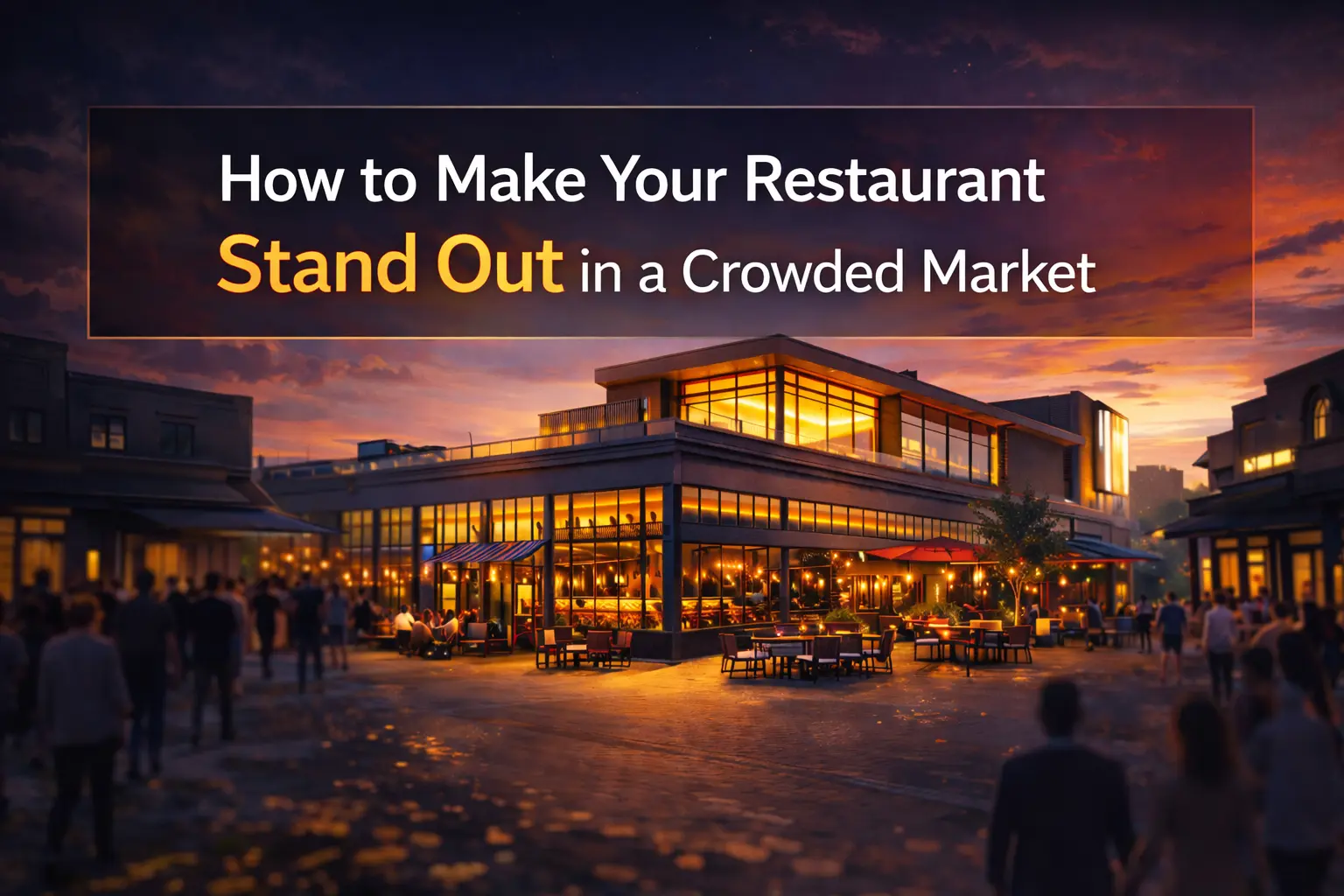
Opening a restaurant is hard. Standing out is even harder. With thousands of competitors in every metro area, the real challenge isn’t just serving good food — it’s developing a clear restaurant marketing strategy and building a memorable brand that attracts and retains customers.
If you’re wondering how to make your restaurant stand out, the answer isn’t one tactic. It’s a combination of smart positioning, consistent branding, creative promotion, and digital visibility. Below is a practical guide to building a marketing strategy for restaurant success — especially if you’re competing against national chains.
Start With a Strong Restaurant Branding Strategy
Before launching ads or social campaigns, you need clarity. Restaurant branding is more than a logo — it’s your identity, voice, atmosphere, and promise.
A clear restaurant branding strategy answers:
- What makes your restaurant different?
- Who is your ideal customer?
- What experience do you deliver beyond food?
- Why should someone choose you over competitors?
If you can’t answer these clearly, marketing becomes scattered.
Strong branding includes:
- A distinct visual identity (logo, colors, design consistency)
- A defined tone of voice
- A focused cuisine or concept
- Clear target audience positioning
The most successful independent restaurants don’t try to appeal to everyone. They specialize.
Develop a Marketing Strategy for Restaurant Growth
A powerful marketing strategy of restaurant operations connects branding with promotion.
Your restaurant marketing strategy should include:
- Customer acquisition plan
- Retention strategy
- Digital presence optimization
- Local engagement efforts
- Seasonal promotions
Instead of random marketing efforts, build a simple monthly calendar that includes:
- Social media campaigns
- Special events
- Email marketing
- Limited-time menu promotions
This structure makes execution consistent.
How to Market a Restaurant on Social Media
One of the most common questions operators ask is how to market a restaurant on social media effectively.
Social media works when it’s:
- Consistent
- Authentic
- Visual
- Community-driven
Focus on Platforms That Matter
For most restaurants:
- Instagram = visual storytelling
- TikTok = reach and discovery
- Facebook = local community engagement
Show More Than Food
Post:
- Behind-the-scenes prep
- Staff highlights
- Customer reactions
- Kitchen moments
- Limited-time specials
The goal isn’t just food photos — it’s connection.
Use Repetition
Consistency builds familiarity. Post 3–5 times per week minimum.
Unique Restaurant Ideas That Create Buzz
If you want to know how to differentiate your restaurant, start with experience.
Memorable restaurants create something distinctive:
- Themed dining nights
- Chef tasting experiences
- Open kitchen interaction
- Hyper-local sourcing
- Seasonal pop-up menus
These unique restaurant ideas give customers something to talk about — and share.
The more shareable the experience, the stronger your organic marketing becomes.
Restaurant Promotion Ideas That Actually Drive Sales
Many operators run discounts. Few build strategic promotions.
Strong restaurant promotion ideas include:
- Limited-time menu items
- Loyalty programs
- “Bring a friend” incentives
- Holiday-specific tasting menus
- Chef’s table events
For even stronger differentiation, develop unique restaurant promotion ideas such as:
- Community fundraiser nights
- Mystery menu weeks
- Seasonal tasting flights
- Industry-night specials
For even more impact, combine promotions with strategies designed to improve your bottom line — such as upselling, bundling, and average check enhancement. Learn specific tactics to increase your revenue per guest in this guide on how to increase restaurant average check.
Promotions should create excitement and support your overall pricing and sales strategy rather than training customers to expect discounts.
Build a Restaurant Business Plan Marketing Strategy
Marketing should not be separate from your financial plan.
A smart restaurant business plan marketing strategy includes:
- Defined monthly marketing budget
- ROI tracking per campaign
- Cost per acquisition target
- Revenue growth goals
Your marketing strategy for restaurant growth should directly support profitability.
For example:
- If weekday lunch is slow → market to nearby offices
- If weekends are full but margins are low → adjust menu engineering
Marketing and operations must align.
How to Compete With Chain Restaurants
Independent operators often ask how to compete with chain restaurants that have larger budgets.
The answer is focus.
Chains Win With Consistency
You win with personality.
Here’s how to compete:
- Local Storytelling
Share your origin, your chef, your community involvement. - Menu Flexibility
Chains can’t change menus easily. You can test new dishes quickly. - Personalized Service
Remember repeat guests. Build loyalty. - Community Presence
Sponsor local events. Collaborate with nearby businesses.
When considering how to compete with chain restaurants, lean into what they cannot replicate: authenticity and adaptability.
Strengthen Your Restaurant Concept Ideas
Weak positioning kills differentiation.
Strong restaurant concept ideas are:
- Clear
- Specific
- Memorable
- Experience-driven
Instead of “Italian restaurant,” think:
- “Handmade pasta bar with live production”
- “Modern Mediterranean small plates”
- “Seasonal farm-to-table tasting experience”
Concept clarity simplifies marketing.
Attract Customers Beyond the Menu
If you want to know how to make your restaurant stand out, remember this:
People choose restaurants for:
- Convenience
- Experience
- Emotion
- Social value
Not just food.
Enhance:
- Lighting
- Music
- Seating comfort
- Service interaction
- Plate presentation
Marketing works better when the experience delivers.
Measure What Works
Every restaurant marketing strategy must track performance.
Monitor:
- Social media engagement
- Customer acquisition cost
- Repeat customer rate
- Promotion-driven revenue
- Menu item performance
Without tracking, you’re guessing.
Build Long-Term Brand Equity
Quick promotions generate traffic. Branding generates longevity.
Your restaurant branding should feel cohesive across:
- Website
- Social media
- In-store signage
- Menu design
- Packaging
Consistency builds recognition.
Combine Digital and In-Person Marketing
Modern restaurants cannot rely solely on word-of-mouth.
A complete marketing strategy of restaurant operations includes:
- Google Business optimization
- Online review management
- Email marketing
- Influencer partnerships
- Community events
Online visibility attracts new customers. In-person experience retains them.
Final Thoughts
If you’re serious about learning how to make your restaurant stand out, focus on three pillars:
- Clear branding
- Strategic promotion
- Consistent execution
Your restaurant branding strategy, combined with smart restaurant promotion ideas and a focused restaurant marketing strategy, creates competitive advantage.
You don’t need the budget of a national chain to win.
You need clarity, consistency, and creativity.
Build a defined concept. Market intentionally. Engage locally. Deliver experience.
That’s how independent restaurants thrive — even in crowded markets.