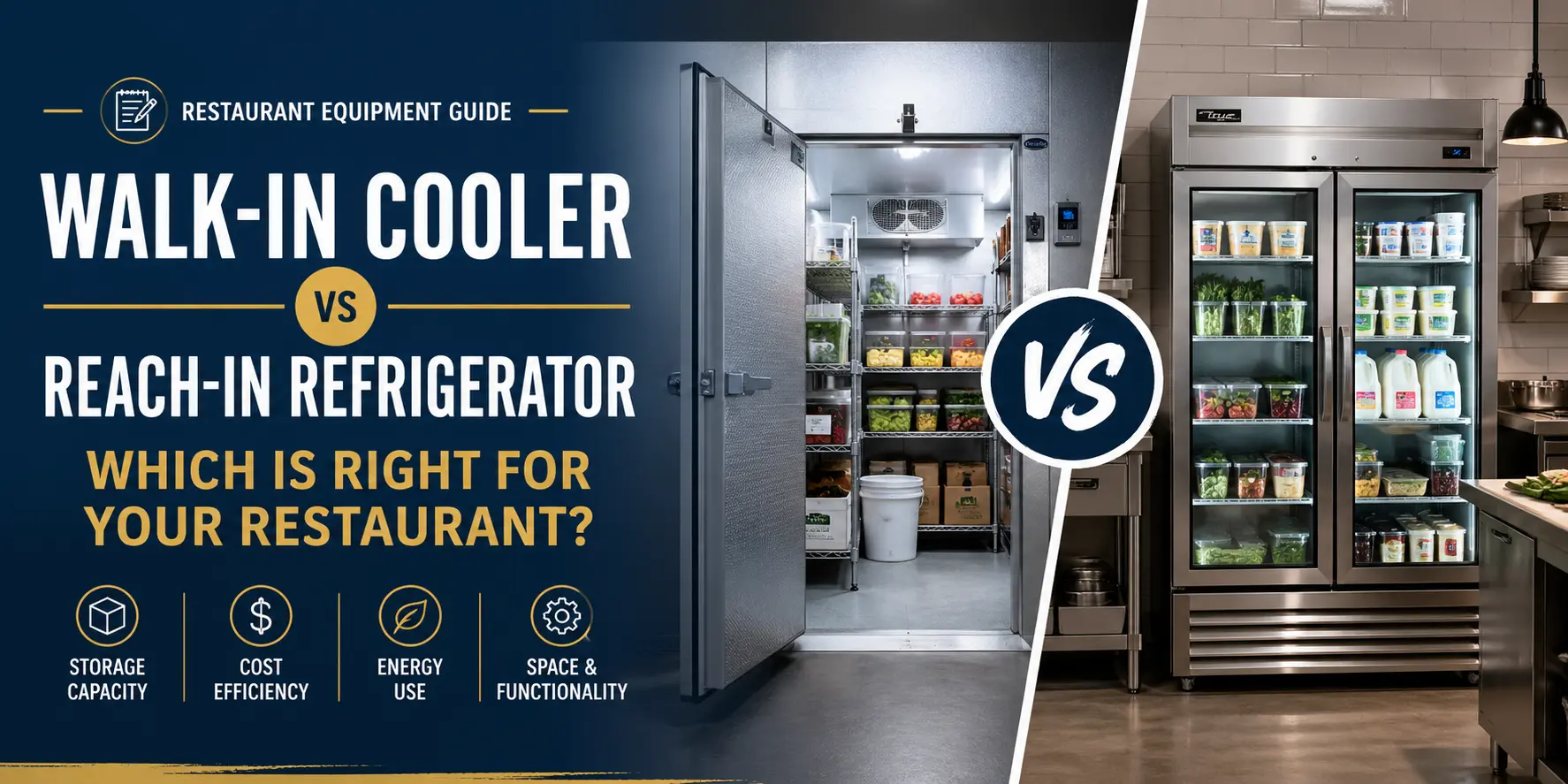
Walk-In Cooler vs Reach-In Refrigerator: Which Is Right for Your Restaurant?

- Quick Answer: Walk-In Cooler vs Reach-In Refrigerator
- What Is a Reach-In Refrigerator?
- Key Differences Between Walk-In and Reach-In Refrigeration
- When Should You Choose a Walk-In Cooler?
- When Should You Choose a Reach-In Refrigerator?
- Cost Breakdown: Walk-In vs Reach-In
- Food Safety and Proper Refrigeration Temperatures
- How to Design a Complete Restaurant Refrigeration Setup
- Walk-In Cooler Installation: What You Need to Know
- Walk-In Cooler vs Reach-In Refrigerator: Long-Term Cost Comparison
- How to Choose Based on Your Restaurant Type
Choosing the right refrigeration setup is one of the most important decisions when designing a commercial kitchen. Whether you’re opening a new restaurant or upgrading your current space, understanding the difference between a walk-in cooler and a reach-in refrigerator can significantly impact your workflow, storage capacity, and operating costs.
Both options are essential types of commercial refrigeration, but they serve very different purposes. The key is knowing which one fits your restaurant’s size, menu, and volume.
This guide compares walk-in coolers vs reach-in refrigerators, including costs, capacity, use cases, and practical recommendations to help you make the right decision.
Quick Answer: Walk-In Cooler vs Reach-In Refrigerator
- Walk-in cooler → best for high-volume restaurants with large storage needs
- Reach-in refrigerator → best for small to medium kitchens and daily access
👉 Most restaurants use both together — reach-ins for daily use and walk-ins for bulk storage.
Walk-In Cooler vs Reach-In Refrigerator (Comparison Table)
| Feature | Walk-In Cooler | Reach-In Refrigerator |
|---|---|---|
| Storage Capacity | Very high | Medium |
| Best Use | Bulk storage | Daily access |
| Space Required | Large | Compact |
| Cost | High | Moderate |
| Installation | Complex | Simple |
What Is a Walk-In Cooler?
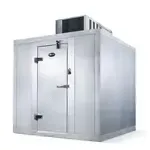
A walk-in cooler is a large refrigerated room designed to store bulk ingredients and inventory. It allows staff to physically enter and organize large quantities of food.
Key Features
- high storage capacity
- adjustable shelving
- consistent temperature control
- ideal for bulk storage
Best For
- high-volume restaurants
- large menus
- restaurants with frequent deliveries
👉 Walk-in coolers are essential when your inventory exceeds what standard refrigerators can handle.
What Is a Reach-In Refrigerator?
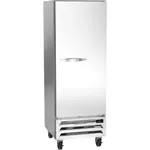
A reach-in refrigerator is a vertical, self-contained unit designed for easy access to frequently used ingredients.
Key Features
- 1, 2, or 3-door configurations
- compact footprint
- quick access during service
Best For
- small to medium kitchens
- prep stations
- front-line cooking areas
👉 Reach-ins are designed for speed and convenience.
Key Differences Between Walk-In and Reach-In Refrigeration
1. Storage Capacity
This is the biggest difference.
- Walk-in cooler → stores large quantities of food
- Reach-in refrigerator → stores daily-use ingredients
👉 If your kitchen handles high inventory, a walk-in is necessary.
2. Workflow and Accessibility
- Reach-in → fast access during service
- Walk-in → slower, used for restocking
👉 Reach-ins improve speed; walk-ins support storage.
3. Space Requirements
- Walk-in → requires dedicated space or room
- Reach-in → fits directly in kitchen layout
👉 Smaller kitchens usually rely on reach-ins.
4. Installation
- Walk-in → requires installation, insulation, and setup
- Reach-in → plug-and-play
👉 Walk-ins are a long-term infrastructure investment.
5. Cost
- Walk-in cooler → $5,000 – $20,000+
- Reach-in refrigerator → $2,000 – $10,000
👉 Walk-ins cost more upfront but offer larger capacity.
When Should You Choose a Walk-In Cooler?
A commercial walk-in cooler is the right choice when:
- you store large quantities of ingredients
- you receive bulk deliveries
- your menu requires significant prep and storage
- you operate at high volume
Example Use Cases
- full-service restaurants
- hotels
- catering operations
👉 If you constantly run out of space, you need a walk-in.
When Should You Choose a Reach-In Refrigerator?
A reach-in refrigerator is ideal when:
- you need quick access to ingredients
- space is limited
- your menu is simple
- your volume is moderate
Example Use Cases
- cafés
- small restaurants
- food trucks
👉 Reach-ins are essential for daily operations.
Do Most Restaurants Need Both?
Yes — and this is where many operators get it wrong.
Why Both Are Important
- Walk-in → bulk storage
- Reach-in → service efficiency
Typical Setup
- 1 walk-in cooler (back storage)
- 1–3 reach-in refrigerators (kitchen line)
👉 This combination creates an efficient refrigeration system.
Walk-In Cooler Size Guide
Typical sizes:
- small → 6’ x 6’
- medium → 8’ x 10’
- large → 10’ x 12’+
👉 Size depends on:
- menu complexity
- delivery frequency
- storage needs
Reach-In Refrigerator Capacity Guide
- 1-door → small kitchens
- 2-door → most common
- 3-door → high-volume kitchens
👉 Most restaurants choose a 2-door reach-in refrigerator.
Cost Breakdown: Walk-In vs Reach-In
Walk-In Cooler Costs
- equipment → $5,000 – $15,000
- installation → $2,000 – $10,000
- maintenance → higher
Reach-In Refrigerator Costs
- unit → $2,000 – $10,000
- installation → minimal
- maintenance → lower
👉 Walk-ins are more expensive but scalable.
Food Safety and Proper Refrigeration Temperatures
Maintaining proper temperatures is critical when using both a walk-in cooler and a reach-in refrigerator. Commercial refrigeration units should typically keep food between 33°F and 40°F to prevent bacterial growth and ensure compliance with health regulations.
Improper temperature control can lead to food spoilage, safety risks, and failed inspections. Following established food safety guidelines helps ensure your refrigeration setup meets industry standards and protects your inventory.
Energy Efficiency Considerations
Energy usage matters for long-term cost.
Walk-In Coolers
- higher energy consumption
- better for bulk storage efficiency
Reach-In Refrigerators
- lower energy usage per unit
- less efficient for bulk storage
👉 The right balance reduces operating costs.
Common Mistakes to Avoid
Choosing Only One Type
Many restaurants try to operate with only reach-ins or only a walk-in.
👉 This creates inefficiencies.
Underestimating Storage Needs
Running out of refrigeration space leads to:
- food waste
- operational delays
Poor Placement
Refrigeration should be:
- close to prep areas
- accessible to staff
What Should You Actually Choose?
If you’re unsure, follow this simple rule:
Small Restaurant
- 1–2 reach-in refrigerators
Medium Restaurant
- 1 walk-in + 1–2 reach-ins
High-Volume Kitchen
- 1 large walk-in + multiple reach-ins
👉 This setup works for most restaurant types.
How to Design a Complete Restaurant Refrigeration Setup
Choosing between a walk-in cooler and a reach-in refrigerator is only part of the equation. Most successful kitchens rely on a combination of refrigeration systems that work together to support storage, prep, and service.
Back-of-House Storage
The walk-in cooler is typically placed in the back of the kitchen or in a dedicated storage area. It is used for:
- bulk ingredients
- deliveries
- long-term storage
This keeps large quantities of food organized and reduces clutter in the main kitchen area.
Line-Level Refrigeration
Reach-in refrigerators are placed closer to cooking and prep stations.
They are used for:
- frequently accessed ingredients
- prepped items
- service-ready products
👉 This reduces the need for staff to constantly move between stations.
Prep Station Refrigeration
Many kitchens also use:
- prep table refrigerators
- undercounter units
These support fast assembly and improve workflow efficiency.
👉 A well-designed system combines all three levels of refrigeration.
Walk-In Cooler Installation: What You Need to Know
Installing a commercial walk-in cooler is more complex than placing a standard refrigerator.
Key Requirements
- proper floor space
- insulated panels
- dedicated electrical setup
- ventilation
Installation Costs
- basic installation → $2,000 – $5,000
- complex builds → $5,000 – $10,000+
Why Installation Matters
Improper installation can lead to:
- temperature fluctuations
- higher energy costs
- equipment failure
👉 Always plan installation early in your kitchen design.
Walk-In Cooler vs Reach-In Refrigerator: Long-Term Cost Comparison
Upfront cost is only part of the decision. Long-term costs can vary significantly.
Walk-In Coolers
- higher upfront investment
- higher energy consumption
- lower cost per unit of storage
Reach-In Refrigerators
- lower upfront cost
- lower energy usage per unit
- higher cost per storage capacity
What This Means
- walk-ins are more cost-effective for large operations
- reach-ins are more efficient for smaller kitchens
👉 The best choice depends on your scale.
How to Choose Based on Your Restaurant Type
Different restaurant types require different refrigeration setups.
Small Café
- 1–2 reach-in refrigerators
- no walk-in needed
Casual Restaurant
- 1 walk-in cooler
- 1–2 reach-ins
High-Volume Restaurant
- large walk-in cooler
- multiple reach-ins
- prep refrigeration
👉 Matching your setup to your concept prevents over- or under-investment.
FAQ
What is the difference between a walk-in cooler and a reach-in refrigerator?
A walk-in cooler is for bulk storage, while a reach-in refrigerator is for quick daily access.
Do I need a walk-in cooler for my restaurant?
Only if you have high storage needs or large inventory.
What size reach-in refrigerator do I need?
Most restaurants use a 2-door unit.
Final Thoughts
Choosing between a walk-in cooler vs reach-in refrigerator isn’t about which is better — it’s about how your kitchen operates.
The most efficient restaurants use both:
- walk-ins for storage
- reach-ins for speed
👉 When combined correctly, they create a refrigeration system that supports efficiency, reduces waste, and improves workflow.