What Is the Maillard Reaction? Why It Matters in Professional Cooking

- What Is the Maillard Reaction?
- Maillard Reaction vs Caramelization
- Why the Maillard Reaction Matters in Cooking
- Why Restaurant Food Browns Better Than Home Cooking
- Foods Most Affected by the Maillard Reaction
- How Temperature Affects the Maillard Reaction
- Why Overcrowding Prevents Browning
- Best Cooking Methods for the Maillard Reaction
- How Commercial Kitchen Equipment Improves Browning
- Maillard Reaction in Restaurant Kitchens
- Why the Maillard Reaction Matters for Restaurants
- FAQ
The Maillard reaction is one of the most important processes in cooking. It’s responsible for the deep browning, rich aroma, and complex flavors found in foods like seared steak, toasted bread, roasted vegetables, and crispy french fries. While many people simply think of it as “browning,” the Maillard reaction is actually a chemical process that transforms both flavor and texture during high-heat cooking.
In professional kitchens, understanding the Maillard reaction in cooking is essential for producing consistent, flavorful dishes. Chefs rely on precise temperatures, proper cooking surfaces, and high-performance equipment to maximize browning and create the signature flavors diners expect from restaurant-quality food.
This guide explains what the Maillard reaction is, how it works, why it matters in professional cooking, and how commercial kitchen equipment helps chefs achieve better results.
What Is the Maillard Reaction?
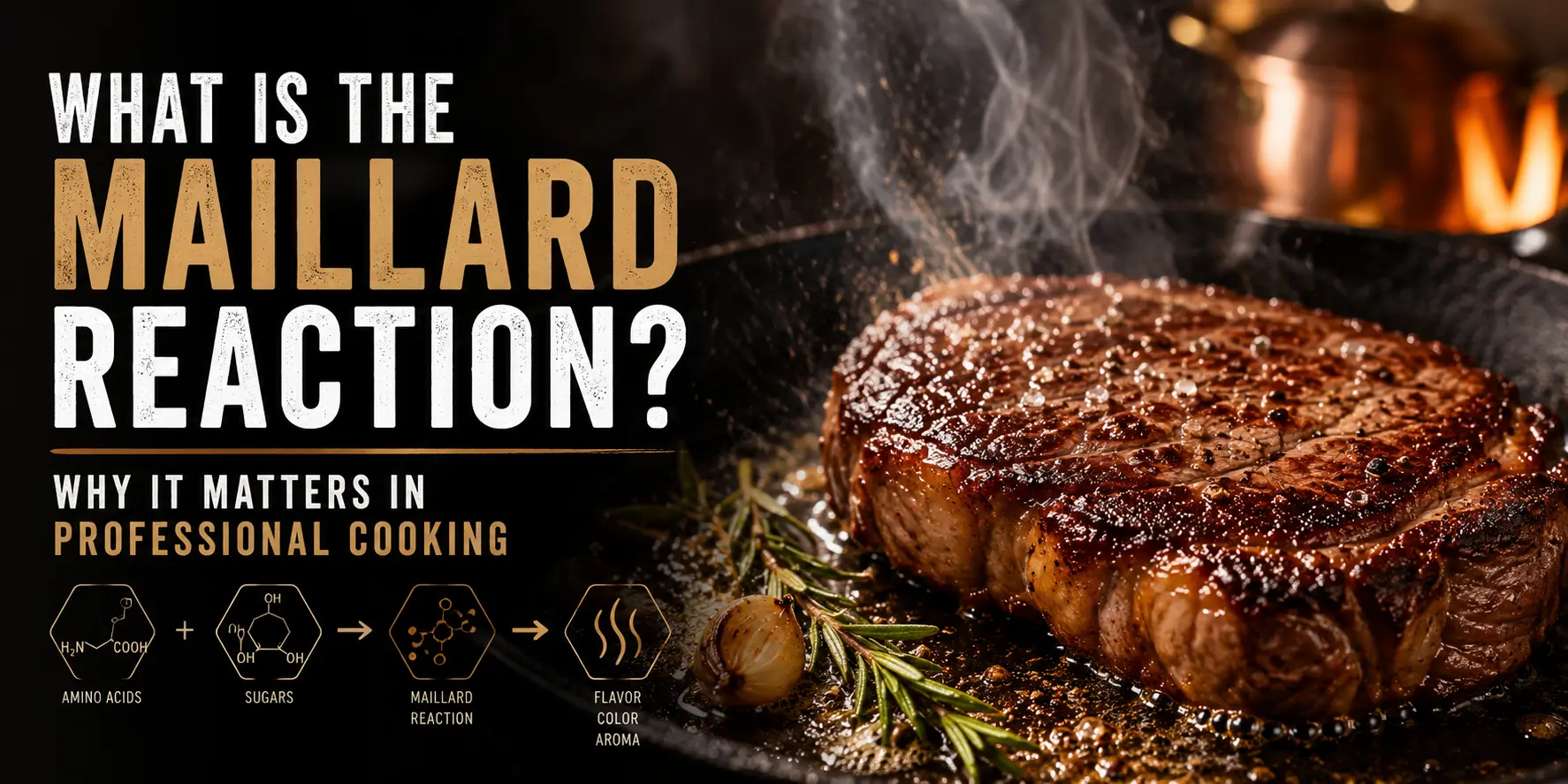
The Maillard reaction is a chemical reaction between amino acids and sugars that occurs when food is exposed to heat. It typically begins around 280°F to 330°F, although exact temperatures vary depending on the food and cooking method.
As food heats up, proteins and sugars react together to create:
- brown coloration
- roasted aromas
- complex savory flavors
👉 This is why grilled steak tastes different from boiled steak and why toasted bread tastes richer than plain bread.
The Maillard reaction is one of the primary reasons high-heat cooking creates more flavorful food.
Maillard Reaction vs Caramelization
The Maillard reaction is often confused with caramelization, but they are not the same thing.
Maillard Reaction
- involves proteins and sugars
- creates savory, roasted flavors
- common in meat, bread, potatoes
Caramelization
- involves sugar only
- produces sweet, nutty flavors
- common in onions, syrups, desserts
👉 Both create browning, but the flavor profiles are very different.
Why the Maillard Reaction Matters in Cooking
Without the Maillard reaction, many foods would taste flat and less appealing.
It affects:
- flavor depth
- texture
- aroma
- visual appearance
For example:
- steak develops a crust
- bread forms a crispy exterior
- roasted vegetables gain sweetness and complexity
👉 The reaction creates the “restaurant-quality” flavor many people associate with professional cooking.
Why Restaurant Food Browns Better Than Home Cooking
One reason restaurant food often tastes better is because professional kitchens are designed to maximize high-heat cooking.
Commercial kitchens use:
- high-BTU ranges
- commercial griddles
- salamander broilers
- heavy-duty cookware
These tools generate more intense and consistent heat than most residential equipment.
Higher Heat Output
Commercial ranges can produce significantly more heat than standard home stoves. This allows chefs to:
- sear faster
- develop crusts quickly
- avoid steaming food
👉 Faster browning means stronger Maillard reactions.
Better Heat Retention
Professional cooking surfaces maintain stable temperatures even when cold food is added.
This is critical because temperature drops can interrupt browning and reduce flavor development.
Faster Cooking Times
Restaurants cook quickly while maintaining flavor because:
- equipment recovers heat rapidly
- surfaces stay consistently hot
👉 Consistency is a major advantage in professional kitchens.
Foods Most Affected by the Maillard Reaction
The Maillard reaction appears in many different foods.
Steak and Burgers
One of the best examples is seared meat.
The browned crust on a steak forms because proteins and sugars react under high heat. This creates:
- savory flavors
- aroma compounds
- crispy texture
Bread and Pizza Crust
Bread develops a golden crust during baking because the outer layer experiences high temperatures.
Pizza ovens enhance this effect by using extremely high heat.
French Fries and Potatoes
Potatoes brown during frying and roasting, creating:
- crispy texture
- nutty flavor
- golden color
Roasted Vegetables
Vegetables become sweeter and more complex when browned.
👉 The Maillard reaction is one of the main reasons roasted vegetables taste richer than steamed vegetables.
How Temperature Affects the Maillard Reaction
Temperature is the most important factor.
Too Low
If heat is too low:
- food steams instead of browning
- moisture prevents crust formation
Optimal Range
The Maillard reaction works best at:
- medium-high to high temperatures
- dry cooking surfaces
Too High
Excessive heat can burn food before proper browning develops.
👉 Professional chefs carefully balance temperature and timing.
Moisture and Browning
Moisture is one of the biggest obstacles to proper browning. Before the Maillard reaction can begin, excess water on the surface of food must evaporate. If food contains too much moisture, the cooking surface temperature drops and steam forms, preventing the dry heat needed for browning.
This is why chefs often pat steaks dry before searing, avoid overcrowding pans, and allow ingredients enough space on the cooking surface. In professional kitchens, high-powered commercial ranges and griddles help evaporate moisture quickly, allowing food to develop a flavorful crust faster.
👉 Less surface moisture means better browning, stronger flavor development, and improved texture.
Why Overcrowding Prevents Browning
One of the most common cooking mistakes is overcrowding the pan.
When too much food is added at once:
- temperature drops rapidly
- steam builds up
- food releases moisture faster than it can evaporate
Instead of browning, the food begins to steam.
Professional kitchens avoid this problem by:
- cooking in smaller batches
- using larger cooking surfaces
- relying on high-BTU commercial equipment
👉 Proper spacing allows heat to circulate and maintain browning temperatures.
Best Cooking Methods for the Maillard Reaction
Certain cooking methods maximize browning more effectively than others.
Searing
Searing uses intense direct heat to rapidly brown the surface of food.
Common equipment:
- commercial griddles
- cast iron pans
- charbroilers
👉 Searing creates strong flavor development in meat and seafood.
Roasting
Roasting allows dry heat to circulate around food, promoting even browning.
This method works especially well for:
- vegetables
- chicken
- potatoes
Grilling
Grilling combines:
- high heat
- open flame
- smoke
This creates complex flavors and deep browning.
Baking
Bread, pastries, and pizza crust all rely heavily on the Maillard reaction during baking.
Commercial ovens improve consistency because they maintain stable temperatures throughout the cooking process.
How Commercial Kitchen Equipment Improves Browning
Professional kitchens are designed around high-performance cooking systems that enhance flavor development.
Commercial ranges produce higher BTU output than residential stoves.
Benefits include:
- faster preheating
- stronger searing
- consistent cooking temperatures
Griddles provide:
- even heat distribution
- large cooking surfaces
- consistent browning
They are widely used for:
- burgers
- sandwiches
- breakfast foods
Salamanders apply intense overhead heat.
Chefs use them to:
- finish steaks
- melt cheese
- crisp surfaces quickly
High-temperature pizza ovens create rapid browning on crusts while maintaining soft interiors.
This balance is one reason restaurant pizza tastes different from homemade pizza.
Maillard Reaction and Flavor Complexity
The Maillard reaction creates hundreds of flavor compounds during cooking.
These compounds contribute:
- savory notes
- roasted aromas
- nutty flavors
- umami depth
👉 This is why browned foods taste significantly more complex than boiled or steamed foods.
Common Mistakes That Reduce Browning
Cooking at Low Heat
Low heat causes steaming instead of browning.
Using Wet Ingredients
Excess moisture slows crust formation.
Overcrowding the Cooking Surface
Too much food lowers temperature rapidly.
Constantly Flipping Food
Frequent movement prevents crust development.
👉 Professional chefs allow food to stay in contact with hot surfaces long enough to brown properly.
Maillard Reaction in Restaurant Kitchens
In restaurant kitchens, browning is not accidental — it is carefully controlled.
Chefs pay attention to:
- cooking surface temperature
- airflow
- timing
- moisture management
Professional kitchens are optimized for:
- speed
- consistency
- heat retention
This allows restaurants to create the same flavors repeatedly throughout busy service periods.
Why the Maillard Reaction Matters for Restaurants
The Maillard reaction impacts:
- food quality
- customer perception
- menu consistency
Diners often associate strong browning with:
- freshness
- flavor
- professional cooking
👉 A properly seared steak or perfectly browned burger creates a more memorable dining experience.
FAQ
What is the Maillard reaction?
The Maillard reaction is a chemical reaction between proteins and sugars that creates browning and complex flavors during cooking.
At what temperature does the Maillard reaction occur?
It typically begins around 280°F to 330°F, depending on the food and cooking conditions.
What foods use the Maillard reaction?
Steak, burgers, bread, pizza crust, potatoes, roasted vegetables, and many baked foods rely on the Maillard reaction.
Is the Maillard reaction the same as caramelization?
No. The Maillard reaction involves proteins and sugars, while caramelization involves sugars only.
Final Thoughts
The Maillard reaction is one of the most important processes in professional cooking. It transforms simple ingredients into deeply flavorful dishes through controlled browning and high-heat cooking.
Professional kitchens achieve stronger Maillard reactions because they use:
- higher heat
- better cooking surfaces
- commercial kitchen equipment designed for consistency
👉 Understanding how the Maillard reaction works helps chefs create richer flavors, better textures, and restaurant-quality results.